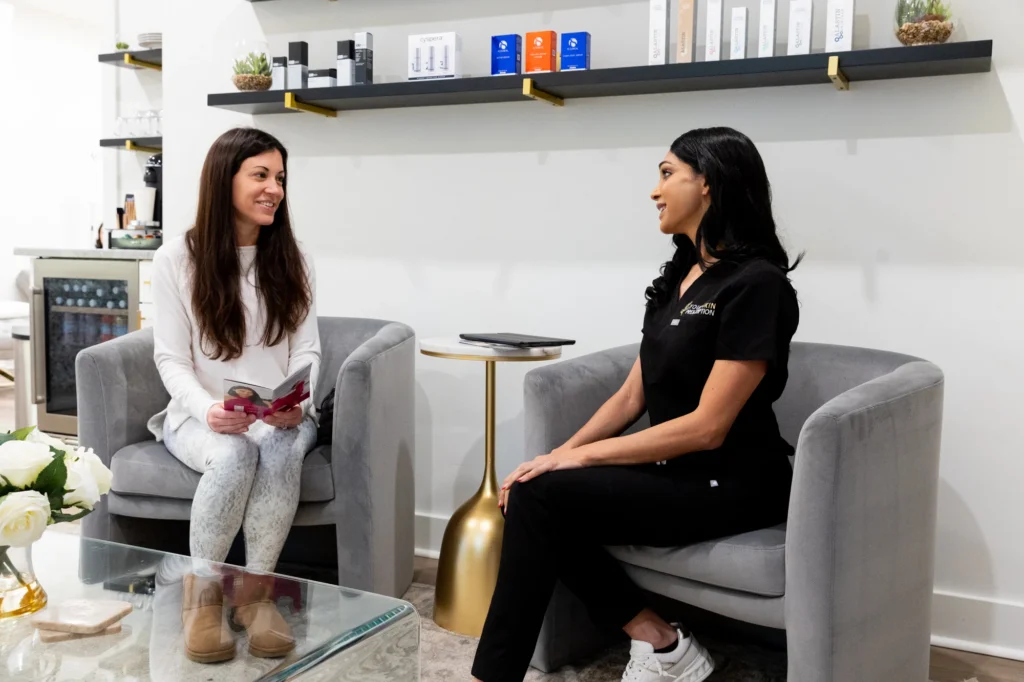

You can have the most dedicated at-home skincare routine—serums, creams, daily SPF—and still feel like it’s not quite enough. When you notice a loss of firmness, it’s a sign you need to address the deeper layers of your skin. This is where the best tightening treatment for face comes in. Professional services work on a structural level to stimulate natural collagen production, something topical products simply can’t do. If you’re ready to take the next step, finding the best facial for skin tightening is key to complementing your routine and restoring your skin’s youthful vitality.
Last updated: June 23, 2026
What Is the Best Facial Skin Tightening Treatment?
The best facial skin tightening treatment is the one matched to your skin laxity, texture, downtime tolerance, and collagen goals. Morpheus8 can help when deeper remodeling, pores, scars, and firmness are priorities, while Sofwave is often chosen for non-invasive ultrasound tightening. A provider consultation should guide the final plan.
.cta-btn{display:inline-block!important;padding:12px 32px!important;font-size:16px!important;font-weight:500!important;text-decoration:none!important;color:#4a4a4a!important;background-color:#fff!important;border-radius:40px!important;border:none!important;transition:all .3s ease-in-out!important}.cta-btn:hover{background-color:#f5f2eb!important;color:#6c6c5f!important}
Key Takeaways
- It’s a Workout for Your Skin: These treatments use targeted energy, like radiofrequency or ultrasound, to signal your body to build new collagen, which gradually restores firmness and improves texture from the inside out.
- Results Unfold Over Time: While you may see an initial glow, the true, lasting lift appears over two to six months. It’s important to have realistic goals, as these treatments are designed to improve mild to moderate laxity, not replace a surgical facelift.
- A Custom Plan is Crucial: The best treatment for you depends entirely on your unique skin and goals, making a professional consultation the most important step to ensure you choose a path that delivers results you’ll love.
What’s the Best Facial for Skin Tightening?
If you’re looking for ways to firm up your skin without going under the knife, you have some incredible options. Modern technology has given us several effective, non-invasive treatments that work by encouraging your skin to produce more of its own natural collagen. The right choice for you really depends on your specific skin goals, from subtle firming to a more noticeable lift. Let’s walk through some of the most popular and effective treatments available at our Sewickley med spa.
Ultrasound Therapy (Ultherapy) for a Deeper Lift
Think of Ultherapy as a non-invasive facelift. It’s the only FDA-cleared treatment that uses focused ultrasound energy to lift and tighten the skin on the neck, chin, and brow. The technology allows your provider to see the layers of tissue they’re treating, ensuring the energy is delivered precisely where it will be most effective. This gentle heat reaches deep into the skin’s foundational layers, triggering a natural regenerative response that produces fresh, new collagen. The result is a gradual, natural-looking lift that develops over two to three months, with no downtime required.
Radiofrequency (Thermage, Forma) for Smoothness
Radiofrequency (RF) treatments are a fantastic way to achieve overall skin tightening. These procedures use radiofrequency energy to gently heat the dermis, the deeper layer of your skin where collagen is made. This controlled warmth signals your skin to ramp up its collagen production, leading to firmer, smoother skin over time. RF treatments are known for being comfortable and safe for all skin types, making them a go-to for anyone looking to address mild to moderate skin laxity. They provide long-lasting results with virtually no downtime, so you can get back to your day immediately.
Morpheus8 vs. Sofwave: Which Option Fits Your Skin Goals?
Morpheus8 RF microneedling combines microneedling with radiofrequency energy, making it a strong option when texture, fine lines, acne scars, enlarged pores, and mild laxity are part of the concern. Sofwave uses ultrasound energy with SofCool cooling to support collagen renewal in the mid-dermis, so it may fit patients who want a non-invasive tightening approach with less interruption. Some patients benefit from a staged plan rather than choosing one technology in isolation.
If texture, acne scars, enlarged pores, and mild laxity are part of your concern, learn more about Morpheus8 RF microneedling in Pittsburgh. If you are comparing non-invasive tightening options, review our laser skin tightening and Sofwave options in Sewickley.
RF Microneedling (Morpheus8) to Remodel Skin
What happens when you combine two powerhouse treatments into one? You get RF microneedling. This treatment pairs the collagen-stimulating effects of traditional microneedling with the deep-heating power of radiofrequency energy. Tiny needles create micro-channels in the skin, and then RF energy is delivered deep into the dermis through these channels. This dual-action approach remodels tissue on a deeper level, making it incredibly effective for tightening areas like the jowls and under the chin. It’s a true game-changer for improving skin structure and firmness from the inside out.
Hybrid Fractional Laser (HALO) for Tone and Texture
If you want to address skin laxity along with other concerns like wrinkles, sun damage, and uneven texture, the HALO laser is an excellent choice. As a hybrid fractional laser, it delivers two types of laser energy to the skin simultaneously. One laser targets the top layer to improve tone and texture, while the other works deeper to stimulate collagen and firm the skin. This comprehensive approach means you get more rejuvenation in a single treatment. It’s the perfect option for anyone looking for a total skin refresh that addresses multiple signs of aging at once.
Classic Microneedling to Rebuild Collagen
Sometimes, the classics are classic for a reason. Traditional microneedling is a trusted method for improving skin health from the inside out. The treatment uses a device with fine needles to create tiny, controlled injuries in the skin. This process kickstarts your body’s natural healing cascade, leading to the production of new collagen and elastin. While its tightening effects are more subtle than heat-based therapies, it’s wonderful for improving skin texture, reducing the appearance of fine lines, and minimizing pores. A series of treatments can leave your skin looking noticeably smoother and more refreshed.
Platelet-Rich Plasma (PRP) for Natural Rejuvenation
Platelet-Rich Plasma, or PRP, is a treatment that uses the healing power of your own body to rejuvenate your skin. It’s a completely natural approach where a small sample of your blood is processed to concentrate the platelets, which are rich in growth factors. These growth factors are like little messengers that tell your skin cells to get to work building new collagen and elastin. When applied to the skin, often paired with microneedling, this “liquid gold” helps to improve texture, tone, and overall firmness. It’s a popular choice for those who want to naturally enhance their skin’s appearance without using synthetic fillers, supporting your skin’s own regenerative processes for a subtle, yet noticeable, improvement.
How Do These Skin Tightening Treatments Work?
So, how do these high-tech treatments actually make your skin firmer? It’s less about magic and more about smart science. At their core, non-surgical skin tightening methods work by tapping into your body’s natural regenerative abilities. They create a controlled response deep within your skin that encourages it to rebuild itself, resulting in a firmer and smoother appearance over time. Think of it as a guided workout for your skin. Here’s what’s happening beneath the surface.
The Science of Rebuilding Collagen
The hero of this story is collagen, the protein that acts like scaffolding for your skin, keeping it firm and plump. As we age, collagen production slows down, leading to sagging. Non-surgical treatments give your collagen factories a wake-up call. By delivering targeted energy, they create a healing response that signals your body to produce brand-new collagen. While these treatments are fantastic for improving skin quality, it’s important to remember they aren’t a replacement for a surgical facelift, which is designed to remove significant excess skin.
How Heat-Based Treatments Create a Firmer Look
Many of the most effective treatments, like radiofrequency (RF), rely on the power of heat. These devices deliver focused energy that gently warms the deeper layers of your skin to a precise temperature. This therapeutic heat is the catalyst that makes your skin produce more collagen and elastin, the two key proteins for firmness and elasticity. This process, known as collagen remodeling, is what gradually tightens your skin from the inside out. It’s a popular approach to non-surgical skin tightening because it uses your skin’s own biology to create natural-looking results.
When Will You See Your Skin Transform?
Patience is key when it comes to seeing your final results. Skin tightening works with your body’s natural renewal cycle, so the collagen-building process doesn’t happen overnight. You may notice some initial plumping, but the most significant changes—like a subtle lift and improved firmness—will appear gradually over two to six months as new collagen forms. For the best outcome, your provider will likely recommend a series of sessions. Committing to a full treatment plan, like our med spa memberships, ensures you get the cumulative benefits needed for beautiful, lasting results.
Proactive Aging: The Concept of Collagen Banking
Think of collagen banking like a retirement savings plan, but for your skin. Instead of waiting until you see significant signs of aging, this proactive approach to aging involves using treatments to build up a rich reserve of collagen while your body is still producing it efficiently. By starting in your late 20s or 30s, you can stimulate your skin to create a strong, dense network of collagen that will help it stay firm and resilient for years to come. Each treatment acts as a “deposit,” strengthening your skin’s underlying structure. This strategy is all about playing the long game, ensuring you maintain your skin’s natural firmness rather than trying to restore it later on.
What Results Can You Realistically Expect?
Let’s talk about one of the most important parts of any skin treatment: the results. It’s easy to get excited by before-and-after photos, but it’s just as important to have a clear and realistic picture of what to expect from your own journey. Non-surgical skin tightening is a process, not a magic trick. The best results come from understanding that timeline and working with a provider who helps you set achievable goals. Your skin, age, lifestyle, and the specific treatment you choose all play a role in your final outcome. Think of it as a partnership between you, your provider, and your body’s natural healing process.
The Difference Between an Instant Glow and a Lasting Lift
While it would be amazing to walk out of a treatment with instantly tighter skin, that’s not quite how it works. Many treatments do provide an immediate plumping effect or a healthy glow due to temporary inflammation and increased circulation. This is a nice preview, but the real, lasting change happens beneath the surface over time. The primary goal of these treatments is to stimulate new collagen production, and that process takes a few months to fully mature. So, while skin tightening can definitely improve the appearance of fine lines and laxity, it’s important to remember it’s not a quick fix. Patience is key as your skin gradually rebuilds its foundational support structure for a firmer, more lifted look.
How Long Will Your Results Last?
The staying power of your results depends heavily on the type of treatment you receive and how well you care for your skin afterward. Generally, you can expect the improvements from a series of non-surgical skin tightening treatments to last for about a year. For more intensive procedures that generate a strong collagen response, like certain laser or radiofrequency treatments, the results can last for several years. Maintaining your results is an ongoing effort. A consistent at-home skincare routine with high-quality products and diligent sun protection will go a long way in preserving that firm, youthful look you worked to achieve. Think of it as protecting your investment.
Maintaining Your Results for Years to Come
Think of your skin tightening treatments as the beginning of a new chapter, not the end of the story. To keep that beautiful, firm look, a little ongoing effort makes all the difference. The most important thing you can do is commit to a diligent at-home skincare routine and protect your skin from the sun every single day. Sun exposure is the number one enemy of collagen, so a broad-spectrum SPF is non-negotiable. Beyond daily care, many people find that a maintenance treatment once or twice a year is perfect for keeping their collagen production stimulated. This proactive approach helps you stay ahead of the natural aging process. Creating a long-term plan with your provider, perhaps through something as convenient as a med spa membership, ensures your skin continues to get the support it needs to look its best for years.
Setting Realistic Goals for Your Skin
It’s crucial to have an open conversation about what these treatments can and cannot do. Non-surgical options are fantastic for improving skin quality, texture, and mild to moderate sagging. They can give you a refreshed and more toned appearance. However, they are not a replacement for a surgical facelift, which is designed to remove significant excess skin. The best first step is always a thorough consultation. By working with a skilled provider, you can discuss your specific concerns, have your skin assessed, and create a treatment plan that aligns with your personal goals. This ensures you’re choosing a path that will make you feel confident and happy with your results.
Understanding Treatment Intensity
Choosing the right skin tightening treatment is like picking a workout routine. Some are gentle and consistent, perfect for maintenance with no interruption to your day. Others are more intense, requiring a bit of recovery but delivering more significant transformations. The best option is simply the one that fits your goals, lifestyle, and skin. Understanding the differences in intensity, downtime, and results will help you make a confident and informed decision.
Non-Invasive Procedures: No Downtime, Subtle Results
Non-invasive treatments are the perfect entry point into professional skincare. These procedures use energy, like heat, to warm the deeper layers of your skin without breaking the surface. This gentle process signals your body to start producing more of its own collagen and elastin. The beauty of this approach is the convenience—most treatments take less than an hour, and you can often apply makeup and head right back to your day. According to the American Academy of Dermatology, the results appear slowly and look incredibly natural, giving you a subtle firming effect over time.
Minimally Invasive Procedures: More Impact, More Recovery
If you’re looking for a more noticeable improvement, minimally invasive treatments are the next step up. Procedures like microneedling create tiny, controlled micro-channels in the skin to kickstart a more powerful healing and collagen-building response. This approach allows for deeper tissue remodeling and yields more significant changes in skin texture and firmness. The trade-off is a small amount of social downtime—you might experience some redness for a day or two. As the American Board of Cosmetic Surgery notes, these treatments offer more visible results than non-invasive options with far less recovery and risk than surgery.
Laser Resurfacing: The Most Effective Option
For the most significant non-surgical transformation, laser resurfacing is often the top choice. It’s one of the most effective ways to tighten skin, sending targeted heat deep into the dermis to generate a robust collagen response. This intensity addresses moderate skin laxity while also improving concerns like sun damage and fine lines. Because this treatment is more powerful, it does require a longer recovery period. But for those willing to plan for a few days of downtime, the reward is a more dramatic and lasting improvement in your skin’s overall firmness and appearance.
Is a Non-Surgical Treatment Right for You?
Deciding to invest in your skin is a big step, and with so many incredible treatments available, it’s easy to get excited about the possibilities. But the key to loving your results is choosing the right path for your unique skin and goals. Non-surgical skin tightening can deliver beautiful, natural-looking firmness, but it’s not a magic wand. It’s a targeted solution that works best when aligned with the right expectations.
So, how do you know if it’s the right fit for you? It comes down to honestly evaluating where your skin is today and what you hope to achieve. Think of it less as a question of “if” and more as a question of “when” and “what.” We’ll walk through how to assess your skin’s firmness, consider your age and skin type, and understand the point at which a surgical option might be a better conversation to have. This is all about empowering you to make the best choice for your confidence and your complexion.
How to Check Your Skin’s Firmness
Take a moment to look at your skin. Are you noticing a little softness along your jawline that wasn’t there before? Maybe some fine, crepey texture on your neck or under your eyes? If you’re dealing with the early signs of lost elasticity, you’re likely a fantastic candidate for non-surgical skin tightening. These treatments are designed to address mild to moderate laxity, giving your skin a subtle lift and a smoother, more toned appearance.
One of the biggest draws is that they offer a way to be proactive about skin aging with significantly less recovery time and cost than a surgical procedure. It’s the perfect middle ground for someone who wants noticeable improvement without the downtime or intensity of going under the knife.
Does Your Age and Skin Type Matter?
As we move through our 30s and beyond, our bodies naturally slow down the production of collagen and elastin—the proteins that act like scaffolding for our skin, keeping it firm and bouncy. Non-surgical treatments work by gently heating the deeper layers of the skin to wake up those sleepy collagen-producing cells.
Because of this, the ideal candidate is typically someone with mild to moderate loose skin who still has good skin elasticity. This means your skin has the ability to bounce back and heal effectively, allowing it to respond beautifully to the collagen-stimulating effects of the treatment. While age is a factor, the actual condition of your skin is what matters most.
Who is an Ideal Candidate for Non-Surgical Tightening?
The best candidates for these treatments are those who are starting to see the first signs of skin laxity and want to get ahead of it. The ideal candidate is typically someone with mild to moderate loose skin who still has good skin elasticity. This means your skin has the ability to bounce back and heal effectively, allowing it to respond beautifully to the collagen-stimulating effects of the treatment. One of the biggest draws is that these treatments offer a way to be proactive about skin aging with significantly less recovery time and cost than a surgical procedure. It’s the perfect middle ground for someone who wants a noticeable improvement without the downtime or intensity of going under the knife.
Lifestyle Factors for Optimal Results
To get the most out of your treatment, think of it as a partnership between you and your provider. Your lifestyle choices play a huge role in supporting and extending your results. The most important factor is diligent sun protection. UV exposure is the number one cause of collagen breakdown, so using a broad-spectrum SPF daily is non-negotiable for protecting your investment. A consistent at-home skincare routine rich in antioxidants, along with staying hydrated and maintaining a healthy diet, provides your skin with the building blocks it needs to create strong, new collagen. These simple habits create the optimal environment for your skin to heal and rejuvenate, ensuring your results are as beautiful and long-lasting as possible.
When to Postpone or Avoid Treatment
While these treatments are incredibly effective, they aren’t the right fit for everyone. It’s important to postpone any procedure if you are pregnant, breastfeeding, or have an active skin infection in the area you want to treat. Additionally, certain health conditions may affect your candidacy, which is why a thorough consultation is so important. It’s also crucial to have realistic expectations. Non-surgical options are fantastic for improving skin quality, texture, and mild to moderate sagging. However, they are not a replacement for a surgical facelift, which is designed to remove significant excess skin. If you have more advanced skin laxity, a surgical procedure may be a better option to achieve your goals.
When Is a Surgical Option a Better Fit?
Let’s be real: non-surgical treatments have their limits. While they are incredible for firming and smoothing, they cannot physically remove excess, stretched, or significantly sagging skin. If you have more advanced skin laxity, you may find that these treatments don’t deliver the dramatic lift you’re hoping for. Their primary function is to improve skin quality and texture, not to provide the same results as a facelift.
If you can pull a fair amount of loose skin away from your face or neck, a surgical consultation might be a more productive route. This isn’t a mark against non-surgical options; it’s simply about matching the right tool to the right job to ensure you’re happy with your final outcome.
Understanding the Risks and Side Effects
Thinking about a new skin treatment is exciting, but it’s completely normal to have questions about safety. The great news is that non-surgical skin tightening treatments have a strong safety record, especially when you’re in the hands of a skilled provider. Our priority is always your health and comfort, so let’s walk through what you can expect and put your mind at ease. These procedures are designed to be both effective and safe, helping you achieve your goals with confidence.
What to Expect Immediately After Your Treatment
One of the best parts of non-surgical skin tightening is the minimal downtime. Most treatments take an hour or less, so you can often schedule them during a lunch break. Immediately after your session, it’s common to see some temporary redness and minor swelling in the treated area. Think of this as a sign that your skin is getting to work building new collagen. These effects usually fade within a few hours to a couple of days. You can typically return to your daily activities right away, making it a seamless addition to your routine.
A Look at Potential (But Rare) Risks
When performed by a qualified medical professional, the risks associated with these treatments are very low. The most common side effects are the temporary redness and swelling we just talked about. Choosing a provider you trust is the single most important step you can take to ensure a safe and successful outcome. A knowledgeable professional will assess your skin and medical history to confirm you’re a good candidate. Building a relationship with your provider through our med spa memberships ensures you receive consistent, personalized care tailored to your skin’s unique needs over time.
Breaking Down the Safety of Each Treatment
Each skin tightening technology works a bit differently, but they all operate on the same basic, safe principle: stimulating your body’s natural healing process. Ultrasound treatments use focused heat to trigger collagen production deep within the skin. Radiofrequency (RF) also uses heat to gently warm the underlying tissue, resulting in an immediate tightening sensation and long-term collagen growth. Advanced options like RF Microneedling deliver that radiofrequency energy even more precisely for dramatic results. During a consultation, your provider will explain which treatment is the safest and most effective way to achieve younger-looking skin based on your specific goals.
How to Choose the Best Tightening Treatment for Your Face
With so many incredible options available, finding the right one can feel like a big decision. But it doesn’t have to be overwhelming. The key is to align the treatment with your specific skin goals, lifestyle, and budget. Think of it as creating a personalized roadmap for your skin’s health. A consultation with a trusted provider is always the best first step, but understanding the basics can help you go into that conversation feeling empowered and prepared. Let’s walk through the key factors to consider so you can feel confident in your choice.
How Do I Choose Between Morpheus8, Sofwave, and Other Skin Tightening Facials?
Choose based on the main concern, not the trendiest device name. Texture and acne-scar concerns often point toward RF microneedling. Early laxity and lift-focused goals may point toward ultrasound tightening. A consultation at Your Skin Prescription can help match the treatment intensity, recovery window, and maintenance plan to your skin.
Your Skin Prescription pairs a boutique med spa experience with medical oversight, credentialed providers, and personalized treatment planning for Sewickley and Greater Pittsburgh patients. For a personalized recommendation, book a consultation with Your Skin Prescription in Sewickley to compare Morpheus8, Sofwave, and other collagen-supporting treatments with a trained provider.
Matching the Right Technology to Your Goals
First, let’s get clear on what you want to achieve. Are you looking for a subtle lift, improved texture, or a more defined jawline? Non-surgical treatments are fantastic for firming up mild to moderate skin laxity by stimulating collagen production deep within the skin. However, it’s important to have realistic expectations. While these technologies work wonders on skin quality, they are not a replacement for a surgical facelift, which is designed to remove significant excess skin. Think of non-surgical options as a way to restore your skin’s youthful snap and glow, helping you look refreshed and revitalized.
Targeting Specific Areas of Concern
When you think about skin tightening, you’re probably picturing a specific area that’s been on your mind. Maybe it’s a softening jawline, the fine lines around your eyes, or a little laxity on your neck. The beauty of modern treatments is that they can be tailored to address these exact spots. Different technologies are designed to work at different depths and are better suited for certain zones. Understanding which treatment excels where is the key to creating a plan that delivers the results you’re looking for. This isn’t about a one-size-fits-all approach; it’s about precision and personalization for your unique facial structure.
Common Treatment Zones for Face and Body
Let’s break down which treatments are often used for specific areas. If you’re looking to lift and tighten the skin on your neck, chin, and brow, ultrasound therapy is an excellent choice because its focused energy can target the skin’s deep foundational layers. For overall smoothness and firming across the face and neck, radiofrequency treatments are fantastic. If your main concern is tightening the jowls or the area under your chin, RF microneedling is a powerhouse, as it remodels tissue from within. For those who want to address laxity along with texture and wrinkles, a hybrid fractional laser can treat multiple signs of aging at once for a comprehensive refresh.
How Many Sessions Will You Actually Need?
Patience and consistency are your best friends when it comes to skin tightening. Most treatments deliver the best results through a series of sessions. While some people see a difference after just one appointment, a typical plan involves one to three sessions spaced several weeks apart. The magic happens gradually as your body builds new collagen, with final results appearing over two to six months. According to the American Board of Cosmetic Surgery, these beautiful, natural-looking results can last for over a year. During your consultation, your provider will create a customized treatment schedule tailored to your skin and goals.
Typical Session Plans for Laser and RF Treatments
It’s helpful to think of these treatments less like a single event and more like a personal training program for your skin. To get the best, most lasting results, you’ll likely need a series of sessions. A common plan for laser or radiofrequency treatments involves one to three appointments, each scheduled several weeks apart. This spacing is intentional; it gives your skin the time it needs to respond to the treatment and kickstart the collagen-building process. According to the American Board of Cosmetic Surgery, this gradual approach allows your body to build new collagen, with final results appearing over two to six months. Committing to a full treatment plan ensures you get the cumulative benefits needed for beautiful, lasting results.
Considering the Cost and Your Schedule
Investing in your skin is an investment in your confidence. The cost of skin tightening treatments can vary depending on the technology used and the number of sessions required. Since these are considered cosmetic procedures, they aren’t covered by insurance. It’s helpful to think about both the immediate cost and the long-term value. With results that can last a year or more, many find it to be a worthwhile part of their self-care routine. To make treatments more accessible, we offer med spa memberships that help you plan and budget for your skin health journey, ensuring you can maintain your gorgeous results.
What to Expect for Comfort and Downtime
One of the biggest draws of non-surgical treatments is the minimal downtime. Most people can return to their daily activities right away. As for comfort, the experience varies. Some treatments, like Forma, feel like a warm stone massage, while more intensive options like RF microneedling may involve some temporary discomfort that is managed with topical numbing cream. After your session, you might experience some temporary redness or slight swelling, but these side effects typically fade within a day or two. Choosing a board-certified and experienced provider is the most important step you can take to ensure your safety and comfort.
The Importance of Choosing a Qualified Provider
The technology is only half the equation; the skill of the person operating it is what truly makes the difference. A great provider does more than just follow a protocol—they understand the nuances of your skin and can tailor the treatment to your specific needs. This ensures not only beautiful results but also your safety, as risks are very low when treatments are performed by a qualified medical professional. This is why a professional consultation is the most important part of the process. It’s your opportunity to have your skin properly assessed, discuss your goals, and make sure you feel comfortable and confident in your provider’s hands. Choosing a professional you trust is the single most important step you can take to ensure a successful outcome you’ll love.
Comparing Skin Tightening Devices: How to Choose the Right One
Not all skin tightening devices are created equal, and understanding how each technology works can help you make a more informed decision. The most common categories include radiofrequency (RF), ultrasound-based treatments like Ultherapy, and combination therapies that pair energy delivery with microneedling. Each option targets collagen production but differs in depth, intensity, and overall experience.
Radiofrequency devices typically heat the upper to mid-dermis, making them ideal for mild to moderate skin laxity, fine lines, and overall texture improvement. These treatments are often more comfortable, require little to no downtime, and can be performed in a series for gradual, natural-looking results. RF is commonly used for patients looking for maintenance or early intervention.
Ultrasound-based treatments, on the other hand, penetrate deeper layers of tissue, including the SMAS layer, which is also targeted in surgical facelifts. This makes them a strong option for more noticeable lifting in areas like the jawline, cheeks, and neck. While results may take longer to fully develop, they can be more dramatic depending on the patient’s baseline skin laxity.
Combination treatments, such as RF microneedling, bridge the gap by delivering energy deeper into the skin while also improving surface texture. These are often recommended for patients dealing with both laxity and acne scarring or uneven tone.
Ultimately, the best device depends on your skin condition, goals, and tolerance for downtime. A personalized consultation ensures that the selected treatment aligns with both your expectations and long-term skin health plan.
From Treatment to Recovery: A Step-by-Step Guide
Knowing what to expect before, during, and after your appointment can help you feel confident and prepared. Let’s walk through the entire process, from the treatment itself to the simple aftercare steps that will help you maintain your results.
What to Expect During Your Appointment
When you come in for your treatment, our first priority is your comfort. Your provider will begin by cleansing your skin before applying the specialized device to the targeted areas. Using technologies like radiofrequency or ultrasound, the device sends controlled heat into the deeper layers of your skin. Most people describe the feeling as a gentle, warming sensation that’s quite manageable. The entire appointment typically lasts between 30 and 90 minutes, depending on the size of the area being treated. It’s a simple and effective process with no needles or incisions required, allowing you to relax while we handle the rest.
Your Week-by-Week Recovery Timeline
One of the biggest advantages of non-surgical skin tightening is the minimal recovery time. You can generally return to your normal routine immediately after your session. It’s common to experience some mild redness or a bit of swelling, but this typically subsides within a day or two. While you may notice a subtle, immediate glow, the most significant results appear gradually. Your body will be busy building new collagen over the following weeks and months. This slow and steady improvement means your skin will look naturally firmer and more lifted over time, so a little patience will pay off beautifully.
Aftercare Tips to Maintain Your Results
To protect your investment and enjoy your results for as long as possible, consistent aftercare is key. The single most important thing you can do is wear a broad-spectrum sunscreen every single day. Sun damage breaks down collagen and can undo the progress you’ve made, so make this a non-negotiable part of your morning routine. Additionally, keeping your skin hydrated from the inside out by drinking plenty of water and using a high-quality moisturizer will support the healing process. Continuing with a great skincare regimen is the best way to maintain your skin’s health and firmness. Our med spa memberships can also help you stay on track with professional guidance and treatments.
Common Skin Tightening Myths, Debunked
When you’re exploring skin tightening treatments, it’s easy to get lost in a sea of information—and misinformation. Let’s clear the air and set the record straight on a few common myths. Understanding what these treatments can and can’t do is the first step toward getting results you’ll truly love. It’s all about matching the right treatment to your unique skin and having realistic expectations from the start.
At Your Skin Prescription, we believe in empowering you with honest, clear information. That’s why we’re tackling the biggest misconceptions head-on, so you can feel confident and excited about your skincare journey.
Professional Treatments vs. At-Home Options
The beauty aisle is filled with promises in pretty bottles, and it’s tempting to believe a firming cream or facial tool can deliver the same results as a professional treatment. While a great at-home routine is essential for maintaining skin health, it’s important to understand its limitations when it comes to significant skin tightening. Topical products, exercises, and supplements work very differently from the technologies used in a med spa. Let’s break down what you can realistically expect from at-home options versus what a professional treatment can achieve.
The Limits of Skin Tightening Creams and Lotions
We’ve all been drawn in by a luxurious cream that promises to lift and firm. While these products can feel wonderful and make your skin appear more supple, they often deliver very subtle results. According to the American Academy of Dermatology, any immediate plumping you see is typically due to moisturizing ingredients that temporarily fill out fine lines. These creams work on the epidermis, the outermost layer of your skin. The real cause of sagging, however, is the loss of collagen and elastin in the deeper dermal layers. Topical products simply can’t penetrate deep enough to rebuild that foundational structure, which is why their effects are often minimal and temporary.
Helpful Ingredients vs. Temporary Effects
Not all ingredients are created equal. Certain products, particularly those containing retinoids like retinol, can offer some benefit by encouraging your body to make more collagen. Over time, this can lead to minor improvements in your skin’s texture and firmness. However, this is a slow process that yields subtle results. Many other “firming” ingredients primarily provide a temporary cosmetic effect. They hydrate the skin’s surface, making it look smoother for a few hours, but they don’t create lasting structural change. This is why professional treatments that work deep within the skin are necessary for achieving a noticeable and durable lift.
What About Oral Supplements and Facial Exercises?
Two other popular at-home methods are collagen supplements and facial exercises, often called “face yoga.” While oral supplements can support your overall skin health from within, their ability to specifically target and tighten facial skin is not as direct or effective as a clinical treatment. Similarly, there isn’t much scientific evidence to prove that facial exercises can reverse sagging. As some experts note, these at-home solutions are best for keeping your skin healthy, not for making significant structural changes. While face yoga might improve blood flow for a temporary refreshed look, it won’t rebuild the collagen needed to truly firm your skin.
Myth: You’ll See a Difference Instantly
We all love instant gratification, but great skin often requires a little patience. A popular myth is that you’ll walk out of your appointment looking like you’ve had a facelift. The reality is that non-surgical skin tightening treatments work by encouraging your body to produce new collagen, and this process takes time.
While you might notice an immediate glow or a subtle plumping effect right after your session, the real magic happens over the following weeks and months. As your skin rebuilds its collagen and elastin foundation, you’ll see a gradual improvement in firmness and a reduction in fine lines. Think of it not as a quick fix, but as a long-term investment in your skin’s health and structure.
Myth: It’s the Same as a Facelift
Non-surgical treatments are fantastic for improving skin texture and firmness, but they aren’t a substitute for a surgical facelift. It’s important to understand the distinction. Treatments like RF microneedling or ultrasound therapy work within the skin’s layers to improve its quality and elasticity. They can beautifully address mild to moderate skin laxity.
However, a surgical facelift is designed to physically remove excess skin and reposition underlying tissues. If significant sagging is your primary concern, surgery might be a more suitable option. The best way to know which path is right for you is to schedule a consultation with a skilled provider who can assess your skin and discuss your goals.
Myth: These Treatments Are Painful
The fear of pain can stop anyone in their tracks, but the idea that skin tightening treatments are unbearable is largely a myth. While they aren’t exactly a walk in the park for everyone, most people describe the sensation as manageable discomfort rather than true pain. Your provider will prioritize your comfort throughout the entire process.
For many treatments, a topical numbing cream is applied beforehand to minimize any sensation. Modern devices are also designed with comfort in mind, often incorporating cooling technologies to keep your skin feeling comfortable. Your provider will talk you through every step, ensuring your experience is as relaxing and stress-free as possible.
Related Articles
.cta-btn{display:inline-block!important;padding:12px 32px!important;font-size:16px!important;font-weight:500!important;text-decoration:none!important;color:#4a4a4a!important;background-color:#fff!important;border-radius:40px!important;border:none!important;transition:all .3s ease-in-out!important}.cta-btn:hover{background-color:#f5f2eb!important;color:#6c6c5f!important}
Frequently Asked Questions
Which facial skin tightening treatment is best for my face? The best option depends on your skin laxity, texture, downtime tolerance, and goals. Morpheus8 may be preferred for deeper remodeling and texture concerns, while Sofwave may fit non-invasive tightening goals. A provider consultation is the safest way to choose.
Does Morpheus8 or Sofwave work better for skin tightening? Neither is universally better. Morpheus8 uses RF microneedling for collagen remodeling and texture improvement. Sofwave uses ultrasound energy for non-invasive tightening. The right choice depends on your skin, comfort level, and whether texture or lift is the bigger priority.
How long do facial skin tightening results last? Results vary by treatment, age, skin condition, and maintenance. Morpheus8 results are often planned as a series and may last up to about two years for many patients per Your Skin Prescription service guidance. Sofwave and other collagen-supporting treatments may also require maintenance.
Is Morpheus8 or Sofwave better for jowls? A provider should evaluate the amount of laxity, skin thickness, and treatment goals before recommending either device. Sofwave may fit non-invasive lift-focused goals, while Morpheus8 may be considered when texture and remodeling are also priorities.
Can skin tightening replace surgery? Non-surgical skin tightening can improve firmness and support collagen, but it does not replace surgical lifting for significant laxity. This is why a provider evaluation matters before choosing a treatment plan.
When should I book a consultation for facial skin tightening? Book when laxity, texture, or firmness changes start to bother you and you want a treatment plan matched to your skin. A consultation helps determine whether Morpheus8, Sofwave, facials, or a staged plan makes sense. For patients planning ongoing skin maintenance, med spa memberships in Pittsburgh can help support a consistent treatment rhythm.
How do I know which skin tightening treatment is the right one for me? The best way to figure that out is by talking with a provider. The perfect treatment for you really depends on your unique skin and what you’re hoping to achieve. For example, if you want a subtle lift for your brow, Ultherapy might be the answer. If you’re looking to improve texture along with firmness, a laser like HALO could be a better fit. A one-on-one consultation allows a professional to assess your skin’s elasticity and create a personalized plan that directly addresses your concerns.
Will the treatment be painful? Your comfort is a top priority, and most people find these treatments very manageable. The sensation can vary depending on the technology used. Some treatments feel like a warm massage, while others might feel a bit prickly or more intense. For those more powerful treatments, your provider will typically apply a topical numbing cream beforehand to ensure you’re as comfortable as possible throughout the session.
How soon will I see results, and how long can I expect them to last? While you might notice a bit of a healthy glow right away, the true firming results appear gradually. These treatments work by stimulating your body’s natural collagen production, which is a process that takes time. You’ll likely see the most significant improvements develop over two to six months. Once you achieve your final results, you can typically enjoy them for a year or even longer, especially if you protect your skin with daily sunscreen.
Is there any downtime after a non-surgical skin tightening treatment? One of the best things about these treatments is the minimal downtime. Most people can get right back to their daily routine immediately after their appointment. It’s common to have some temporary redness and minor swelling in the treated area for a few hours to a day, but this usually resolves very quickly. It’s a great option for anyone who wants effective results without having to press pause on their life.
Am I a good candidate if I have significant sagging? It’s important to have realistic goals for what these treatments can accomplish. Non-surgical options are incredible for improving skin quality and addressing mild to moderate looseness. They work to rebuild collagen and give your skin a firmer, more toned appearance. However, they are not designed to remove a significant amount of excess skin. If you have more advanced sagging, a surgical procedure might be a better path to achieve the results you’re looking for.

Rain Hoffmann is the founder of Your Skin Prescription, a modern med spa in Sewickley, PA. With a passion for advanced skincare and aesthetics, she specializes in Korean facials, medical facials, laser treatments, and results-driven skin care. Rain is dedicated to providing a pampering, stress-free experience in an elegant and welcoming environment.