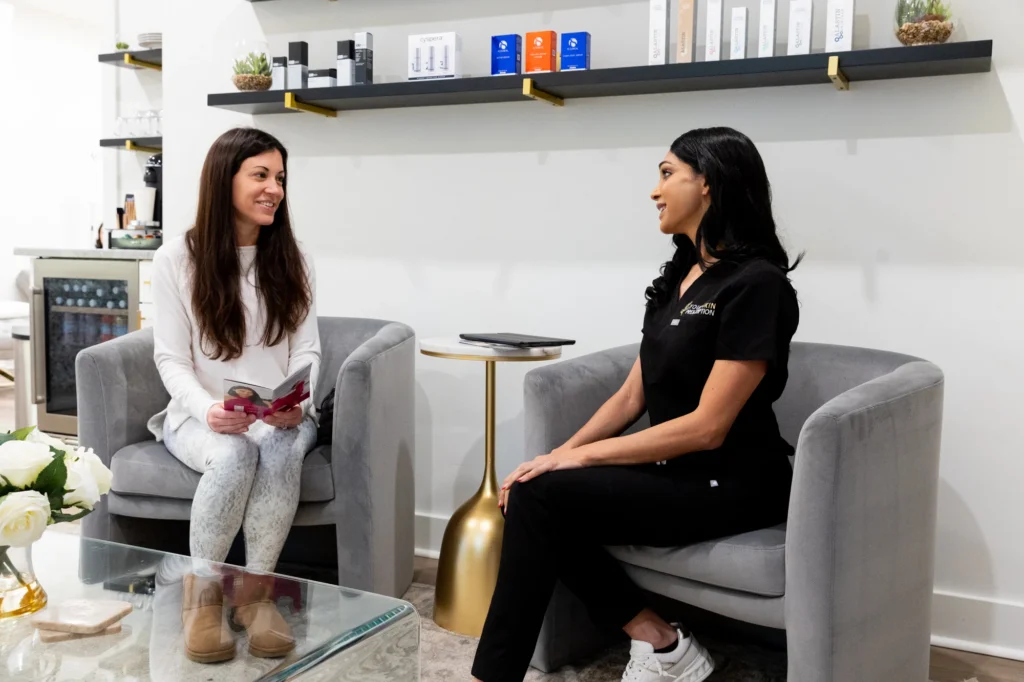
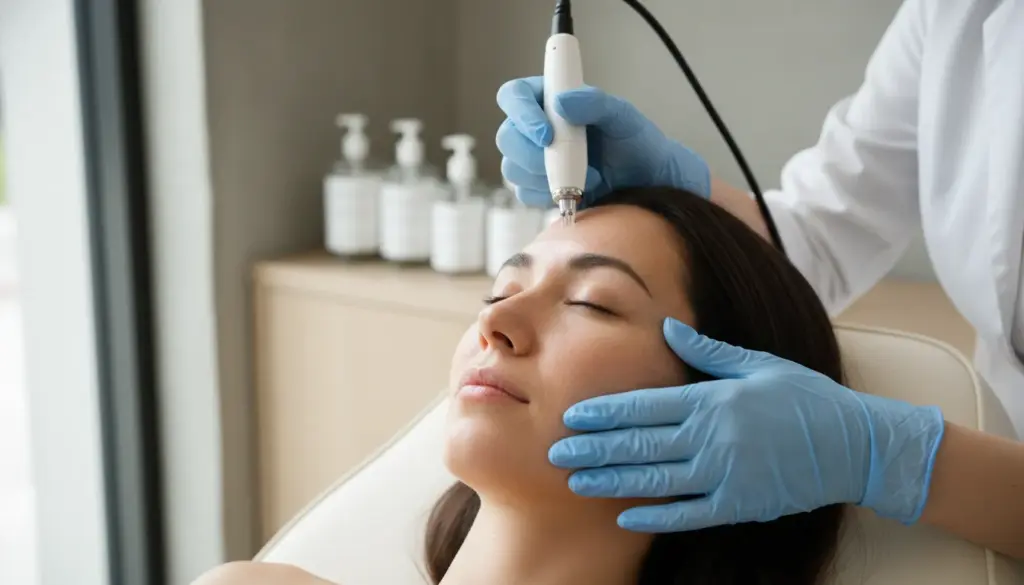
When texture, enlarged pores, or lingering acne scars keep drawing your attention, a thoughtful treatment plan can offer a more refined path forward than adding another product to the shelf. Your Skin Prescription provides personalized microneedling Pittsburgh care in a polished Sewickley setting, pairing clinical precision with the calm, attentive experience your skin deserves.
Schedule your personalized microneedling consultation with Your Skin Prescription.
This guide explains how microneedling works, what happens during an appointment, how recovery typically unfolds, and when changes may become visible. It also compares traditional microneedling with Morpheus8 RF microneedling so you can prepare informed questions for your consultation. Every recommendation should reflect your skin, medical history, comfort, and priorities.
Microneedling Pittsburgh: What is microneedling and how does it work?
Microneedling, also called collagen induction therapy, uses a professional device with fine, sterile needles to create controlled microchannels in the skin. Those precise channels activate a natural repair response that supports new collagen and elastin. Over time, that response may improve the appearance of uneven texture, visible pores, fine lines, and certain scars.
The treatment is carefully adjusted rather than performed at one universal setting. A medical aesthetician evaluates the treatment area and selects an appropriate needle depth, pattern, and number of passes. Areas with delicate skin may need a different approach from areas with more noticeable texture or scarring. This customization helps keep the session aligned with both comfort and the intended goal.
Collagen remodeling is gradual. The treatment begins the process, but the skin continues its repair work after the appointment. This is why an immediate post-treatment glow is not the same as the longer-term changes that may develop over the following weeks and months. Published clinical literature describes microneedling as a versatile minimally invasive treatment, but individual outcomes and timelines vary.
Why controlled microchannels matter
The microchannels created during microneedling are intentional and evenly placed. They prompt the skin to begin a coordinated healing response without removing a layer of skin. During that response, cells involved in repair communicate, collagen production is supported, and tissue gradually remodels. The goal is not to injure skin aggressively. It is to create a measured stimulus under professional control.
The channels may also allow a provider-selected topical formula to sit close to the treated surface immediately after the procedure. Only products chosen for use with the treatment should be applied. This is not the time to experiment with active ingredients or at-home mixtures, since freshly treated skin can be more reactive. Follow the exact post-care plan provided by your medical aesthetician.
What microneedling may address
People often explore microneedling for rough or uneven texture, the appearance of enlarged pores, early fine lines, and certain acne scars. For enhanced skin remodeling and faster healing, we frequently perform PRF microneedling in Pittsburgh, combining traditional micro-needles with growth factors from your own blood. It may also support a generally smoother and more refreshed look. The likely benefit depends on the type and depth of the concern. For example, a shallow textural irregularity requires a different plan from deeper acne scarring.
A consultation at Your Skin Prescription is designed to distinguish between concerns that may respond to microneedling and concerns better suited to another approach. Active irritation, an active breakout, or a health consideration may affect timing or suitability. A responsible plan may include waiting, modifying the treatment area, or selecting a different service rather than proceeding immediately.
Microneedling benefits for common skin concerns
The appeal of microneedling is its ability to support several skin goals through one carefully controlled process. It does not promise a dramatic change overnight. Instead, it encourages gradual remodeling that may refine texture and help the skin look more even. A series can be adjusted as your medical aesthetician observes how your skin responds.
Smoother-looking texture and softer fine lines
As collagen remodeling develops, the skin may feel smoother and look more refined. This can be useful when fine lines or uneven texture make makeup settle inconsistently or affect how light reflects from the skin. Changes tend to emerge progressively, and the degree of improvement depends on age, skin condition, treatment settings, and the consistency of the plan.
Microneedling is not a substitute for every treatment that addresses lines or laxity. It is one option within a broader skin care strategy. Your consultation should include a candid discussion of what the treatment may reasonably address, what it is unlikely to change, and whether combining or sequencing services would be appropriate for your priorities.
Acne scars and visible pores
Certain indented acne scars may look softer as new collagen supports remodeling around the treated area. However, acne scars vary widely in shape, depth, and tethering. Some respond more readily than others, and a medical aesthetician must assess the pattern before recommending a plan. Active acne may also need to settle before treatment begins.
Visible pores can appear more refined as overall texture improves, but pores do not permanently open and close. A realistic plan focuses on their appearance rather than promising to erase them. Your at-home routine, oil production, sun exposure, and skin condition can all influence how noticeable pores remain between sessions.
Uneven tone and overall radiance
Microneedling may contribute to a more even-looking surface and refreshed appearance as older cells turn over and the skin remodels. It can be considered for many skin tones because standard microneedling does not use heat. Even so, every skin tone can experience irritation or unwanted pigment changes when treatment or aftercare is inappropriate, making professional assessment and sun protection essential.
The team at Your Skin Prescription can review visible discoloration before suggesting microneedling. Not every dark mark has the same cause, and some pigment concerns call for a different strategy. The right plan respects the condition being treated instead of assuming one device is appropriate for every form of uneven tone.
What should you expect at a microneedling appointment?
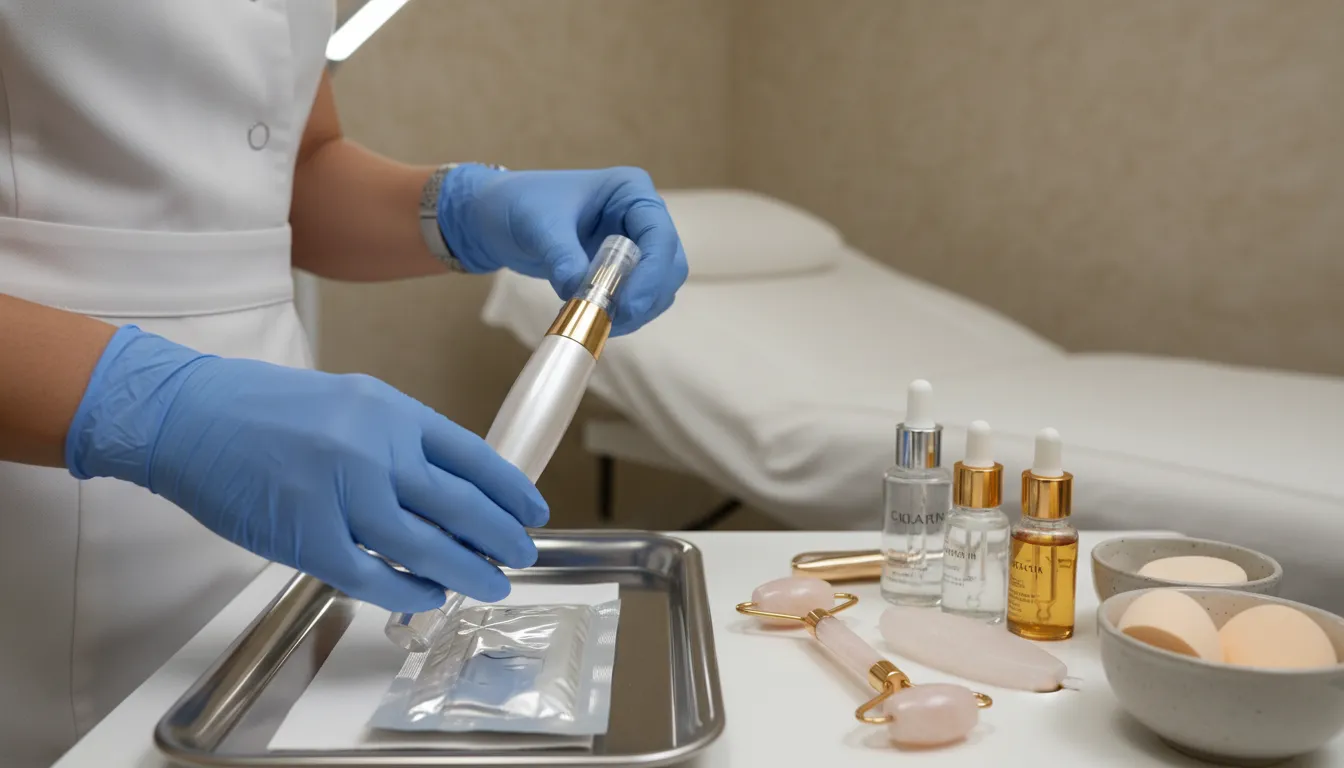
A microneedling appointment generally includes a skin assessment, cleansing, topical numbing, carefully controlled treatment, and personalized aftercare guidance. Your medical aesthetician adjusts the device for the area and concern while monitoring your comfort and skin response. Plan for the full visit to take longer than the device portion because preparation is an important step.
At Your Skin Prescription, the appointment starts with a conversation, not the device. Your medical aesthetician reviews your goals, recent treatments, current products, relevant health information, and how your skin typically reacts. This is the time to mention an active breakout, sensitivity, recent sun exposure, or any change since the consultation. Clear information helps the provider make a responsible treatment decision.
Preparing for the session
Your provider will give you preparation instructions based on your plan. These may include pausing certain active skin care ingredients for a defined period and avoiding excess sun exposure before the visit. Do not stop a prescribed product or medication without direction from the clinician who manages it. If you are unsure whether something matters, ask before the appointment rather than making assumptions.
On arrival, the treatment area is thoroughly cleansed. A topical numbing product is typically applied and allowed time to take effect. Numbing can make the experience more comfortable, although people may still notice pressure, vibration, or a prickling sensation. Sensation can vary by facial area and selected depth, so communicate openly during the session.
During microneedling treatment
After preparation, the medical aesthetician guides the sterile treatment tip across planned sections of skin. The device creates consistent microchannels at settings selected for that area. The provider observes redness and other skin responses throughout the procedure, adapting the technique when appropriate. A careful session is methodical rather than rushed, with attention to both symmetry and comfort.
You may notice greater sensitivity around the forehead, nose, or upper lip than across the cheeks. This does not necessarily indicate a problem. Tell your provider what you feel so adjustments can be considered. The goal is an appropriately controlled treatment, not enduring unnecessary discomfort. The device portion often fits comfortably within a standard appointment, but timing varies with the area treated.
Immediately after the session
Freshly treated skin often appears pink or red and may feel warm, tight, or mildly tender. Your medical aesthetician may apply a soothing product selected for post-treatment use, then review your instructions. Those directions should explain cleansing, moisturizing, sun protection, makeup, exercise, and when to reintroduce active products. Follow the personalized guidance over general advice found online.
Before leaving, ask how to contact the practice if your recovery differs from the expected pattern. It is helpful to know which temporary responses are common and which changes warrant a call. Your Skin Prescription prioritizes an informed, supported experience from consultation through aftercare, so questions during recovery are welcome.
Explore personalized microneedling at Your Skin Prescription in Sewickley.
How much downtime follows microneedling?
Visible downtime commonly lasts one to three days, although recovery varies with treatment depth, skin sensitivity, and the area addressed. Redness, warmth, tightness, mild swelling, and light flaking may occur. Many people resume ordinary activities quickly, but makeup, exercise, sun exposure, and active skin care may need a temporary pause.
Downtime is best understood as a progression rather than a fixed countdown. Immediately after treatment, skin can resemble a mild sunburn. The strongest redness often settles first, followed by lingering pinkness, dryness, or a tight feeling. Deeper or more intensive treatment may produce a more noticeable response. Your provider should explain what is typical for the settings used in your session.
The first 24 hours
During the first day, protect the treated surface and keep the routine simple. Avoid touching the area unnecessarily, picking at the skin, or applying products that were not approved for immediate aftercare. Your medical aesthetician will explain how and when to cleanse. A clean pillowcase and clean hands are sensible details while the skin is freshly treated.
Heat, vigorous exercise, and heavy sweating may intensify discomfort or irritation, so follow the timeline your provider gives you. Sun avoidance is also important. Treated skin can be especially vulnerable to ultraviolet exposure, and unprotected exposure may work against your goal of a clearer, more even appearance.
Days two and three
Redness often becomes less obvious over the next several days. Some people notice light flaking or dryness as the surface settles. Do not scrub, peel, or use exfoliating tools to speed this stage. Gentle care allows the recovery process to unfold without adding avoidable irritation. If makeup is important for your schedule, ask in advance when it may be resumed.
Most routine activities can often be restarted fairly soon, but the appropriate timing is personal. A client who received a lighter treatment may recover differently from someone treated for more pronounced texture. Use the guidance provided after your actual session, since broad timelines cannot account for every skin response.
Aftercare that supports recovery
Thoughtful aftercare focuses on gentle cleansing, hydration, and sun protection. Avoid strong active ingredients until your medical aesthetician says they can be reintroduced. Adding them too early may cause avoidable stinging, redness, or peeling. Once your routine resumes, consistency matters more than trying to accelerate the process with extra products.
If redness grows more intense instead of settling, discomfort feels unusual, or you have another concern, contact Your Skin Prescription for guidance. A post-treatment question is worth asking. Prompt communication allows the team to understand what you are experiencing and recommend an appropriate next step.

When will you see microneedling results?
An early refreshed appearance may emerge after initial redness settles, while changes associated with collagen remodeling generally develop over several weeks to months. Timing and degree vary by concern, treatment intensity, age, skin condition, and individual response. A personalized series may be recommended, but no responsible provider can promise a specific outcome or exact date.
The first visible change is often a temporary glow or smoother feel as the skin recovers. This early effect can be encouraging, but it should not be mistaken for the complete result. Collagen production and tissue remodeling take time. Evaluating the treatment too soon may overlook changes still developing beneath the surface.
The first several weeks
During the first weeks, texture may begin to look more refined as the skin moves through its repair cycle. Photographs taken in consistent lighting can make gradual changes easier to assess. Daily mirror checks are less reliable because lighting, hydration, and normal fluctuations influence appearance. Your provider may schedule follow-up timing that allows a more useful comparison.
Clinical research has reported improvements in texture and laxity after a course of treatment, but study findings do not predict one person’s result. Your starting condition, treatment plan, and biology matter. Your Skin Prescription uses progress and skin response to guide next steps rather than applying the same schedule to every client.
Why a series may be recommended
One session begins a repair response, while a series gives the skin repeated, appropriately spaced opportunities to remodel. More established concerns, such as certain acne scars, may require a longer plan than a general refresh. Sessions must also be spaced to allow recovery. Scheduling treatment too frequently does not mean the skin will improve faster.
Your medical aesthetician will recommend timing based on the concern, settings, and how your skin responded to the previous appointment. Progress is assessed along the way. The plan may be continued, modified, paused, or paired with another option when appropriate. This responsive approach is more useful than committing to a rigid number before seeing how the skin behaves.
Maintaining a refined result
Microneedling does not stop normal aging, sun exposure, or future breakouts. A suitable home routine and consistent sun protection help support the appearance of treated skin. Some people choose occasional maintenance appointments after completing an initial series. Whether that makes sense depends on goals, skin condition, and the provider’s assessment.
Clients who plan regular services may also want to review med spa memberships in Pittsburgh. Membership details and included benefits can change, so discuss current options with the team rather than assuming a specific treatment or schedule is included.
Traditional microneedling vs. RF microneedling
Traditional microneedling and radiofrequency microneedling both use controlled needles, but RF microneedling also delivers radiofrequency energy beneath the surface. The additional energy changes the treatment approach, expected sensation, recovery considerations, and goals it may address. Neither option is automatically better. The right choice depends on what your skin needs and how much downtime fits your schedule.
| Consideration | Traditional microneedling | Morpheus8 RF microneedling |
|---|---|---|
| How it works. | Creates controlled microchannels without heat. | Combines controlled microchannels with radiofrequency energy. |
| Common focus. | Surface texture, visible pores, fine lines, and certain acne scars. | Deeper collagen remodeling and concerns that may include laxity. |
| Planning. | Depth and passes are customized by treatment area. | Needle depth and delivered energy require customized settings. |
| Best next step. | A consultation to compare suitability, comfort, recovery, and goals. | |
Traditional microneedling
Standard microneedling relies on the skin’s response to precisely created microchannels. It is commonly considered for uneven texture, visible pores, fine lines, and certain acne scars. Because it does not deliver heat, it may be a useful option across a wide range of skin tones. Suitability still requires an individual assessment, and careful settings remain important.
Traditional microneedling can be adjusted by depth and treatment area, making it a flexible option within a personalized plan. Clients often appreciate its relatively short visible recovery. However, someone with deeper concerns or a goal involving laxity may be advised to consider a different or complementary treatment after consultation.
Morpheus8 RF microneedling
Morpheus8 combines microneedling with radiofrequency energy delivered at selected depths. That energy creates controlled heat in deeper tissue and may support collagen remodeling for concerns beyond surface texture. The added technology also means treatment planning and aftercare differ from standard microneedling. A qualified provider must determine suitable settings based on the treatment area, skin, and goal.
Your Skin Prescription offers Morpheus8 RF microneedling near Pittsburgh for appropriate candidates. During consultation, ask what each option is intended to address, why one is being recommended, what recovery may look like, and how the plan accounts for your skin tone and history.
Choosing between the options
Your priorities help shape the decision. Standard microneedling may align with a goal focused on surface refinement and shorter visible recovery. RF microneedling may be considered when deeper remodeling is desired. Cost, comfort, treatment area, schedule, and previous procedures also belong in the discussion. A consultation should clarify these tradeoffs without pressuring you toward a more intensive option.
It is also possible that neither approach is the best next step. Active irritation, infection, or another concern may need attention first. Responsible care means recommending treatment only when it reasonably aligns with your current skin and goals.
Is microneedling right for your skin goals?
Microneedling may suit adults seeking gradual improvement in texture, pores, fine lines, or certain scars without a more invasive procedure. Candidacy cannot be determined by concern alone. Current skin condition, health history, healing tendencies, medications, recent procedures, and expectations all influence whether treatment is appropriate and when it should occur.
Questions to discuss during consultation
Bring a clear description of what bothers you and what a meaningful improvement would look like. Ask which concern the recommended treatment is expected to address, how progress will be evaluated, and what limitations apply. If you have an event ahead, discuss timing early enough to accommodate recovery and the possibility that redness lasts longer than the average range.
- What type of microneedling fits my concern, and why?
- What preparation and aftercare will my skin require?
- What response should prompt me to contact the practice?
- How will we evaluate whether another session is appropriate?
- Would a different service better match my goal?
Your consultation should also include a review of relevant medical and skin history. Share previous procedures, sensitivity, scarring tendencies, and current products. Complete information helps the provider identify precautions and set expectations. Never withhold health information because it seems unrelated to the treatment area.
A personalized experience in Sewickley
For people comparing microneedling Pittsburgh providers, technical details matter, but the quality of the consultation matters too. Your Skin Prescription combines individualized planning with an elegant, relaxing environment. The aim is to help you understand the options, feel comfortable asking questions, and choose a measured plan that respects your skin.
You can learn more about the practice and its approach by visiting Your Skin Prescription. When you are ready to discuss your goals, bring your questions and allow time for a thorough assessment. A polished experience begins with clarity about the treatment, its limits, and the aftercare needed to support recovery.
Frequently asked questions
What is the downtime after microneedling?
Visible recovery commonly lasts one to three days, although each person’s skin responds differently. Redness, warmth, tightness, mild swelling, and light flaking can occur. Your medical aesthetician will provide aftercare instructions based on the treatment performed and your skin’s response.
Is microneedling suitable for all skin tones?
Microneedling may be appropriate for a wide range of skin tones because standard treatment does not rely on heat. Suitability still depends on current skin condition, health history, and goals, so an individual consultation is essential before treatment.
How many microneedling sessions will I need to see results?
The number of sessions varies by concern, starting point, and response. A personalized series may be recommended for concerns such as acne scars or uneven texture. Your medical aesthetician will assess progress and adjust the plan rather than promise a fixed number or outcome.
Is RF microneedling available near Pittsburgh?
Yes. Your Skin Prescription offers Morpheus8 RF microneedling in Sewickley near Pittsburgh. It combines controlled microneedling with radiofrequency energy. A consultation helps determine whether standard microneedling or RF microneedling better aligns with your skin and goals.
Plan your microneedling Pittsburgh consultation
A well-designed microneedling plan begins with careful listening and a realistic discussion of what your skin may achieve. At Your Skin Prescription, your medical aesthetician can assess your concerns, compare appropriate options, explain recovery, and build a treatment sequence around your priorities. The next step is a conversation tailored to you.
Contact Your Skin Prescription to schedule your microneedling Pittsburgh consultation.