Hair thinning can develop gradually, making it easy to overlook until your part looks wider, your ponytail feels finer, or more strands appear in the shower. For many people, the goal is not surgery, but a thoughtful treatment that works with the body’s own regenerative signals.
PRF hair restoration Pittsburgh is a non-surgical treatment that uses a small sample of your own blood to create platelet-rich fibrin. Which may support the scalp environment and stimulate hair growth over time. Because PRF contains no anticoagulants or additives, it forms a natural fibrin scaffold that can release growth factors gradually.
At Your Skin Prescription in Sewickley, PRF microneedling is approached as a personalized medical treatment, with conservative expectations and careful attention to your pattern of hair loss. Understanding how the preparation is created and delivered helps clarify what the process may involve.
How PRF Hair Restoration Works
PRF hair restoration is designed to use your body’s own healing signals rather than rely on synthetic additives. The treatment is non-surgical and regenerative, using components from a small sample of your blood to support the scalp and may stimulate hair growth. Your provider will explain whether this approach fits your pattern of thinning during a consultation.
-
A small blood sample is collected
The process begins with a small sample of your own blood. Because the treatment is made from your blood components, PRF is naturally compatible with your body. The collection is a brief clinical step, and your medical professional can review what to expect before beginning.
-
Your blood is processed into PRF
The sample is placed in a specialized centrifuge that separates its components. Unlike traditional platelet-based therapies, PRF preparation uses no anticoagulants or other additives. This preserves a more natural preparation for the treatment and allows the resulting fibrin to form a supportive healing scaffold. Research and clinical education on PRF’s natural scaffold describe this distinction in more detail.
-
A natural fibrin matrix forms
As the sample is processed, fibrin creates a matrix that helps hold the preparation together. Platelets and other blood components remain within this structure, supporting a gradual release of regenerative signals rather than presenting as a simple liquid preparation. These signals may encourage a healthier environment for follicles, although individual results vary.
-
PRF is applied to the scalp with microneedling
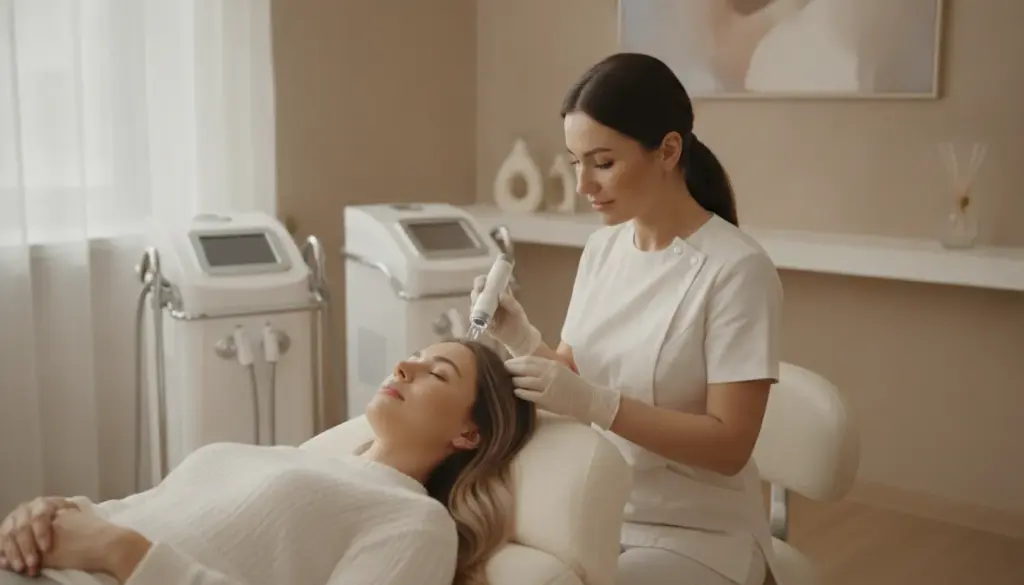
After the PRF is prepared, your provider applies it to the scalp as part of a microneedling treatment. Microneedling creates controlled microchannels across the treatment area, allowing the PRF to reach the scalp while also activating the body’s natural repair response. The goal is to support the follicular environment without surgery or a synthetic implant.
The exact plan depends on your hair-loss pattern, scalp health, and treatment goals. For a broader overview of options, visit our comprehensive guide to hair loss treatments in the Pittsburgh area.
PRF vs. PRP: Why PRF Is the More Advanced Option
Both PRF and PRP use components from your own blood, but the preparation process changes how those components behave after treatment. PRP is a liquid platelet concentrate, while PRF forms a fibrin-based structure that can hold platelets and growth factors in place. That distinction is why PRF is often described as a second-generation platelet therapy.
For patients considering regenerative support for thinning hair, the difference is less about choosing a trend and more about understanding the delivery system. Your provider can help determine whether PRF is appropriate for your pattern of hair loss, overall health, and treatment goals.
| Factor | PRF | PRP |
|---|---|---|
| Preparation | Prepared from a small sample of your own blood without anticoagulants or additives. This allows it to function as a natural healing scaffold. | Typically prepared as a liquid platelet concentrate using a process that may include an anticoagulant to keep the sample from clotting. |
| Physical form | A thicker fibrin matrix that helps hold platelets and other blood components together. | A liquid form that is easier to distribute, but does not create the same fibrin structure. |
| Growth factor release | The fibrin matrix supports a slower, more gradual release of growth factors over approximately 7 to 10 days. | Growth factors are released more quickly because the treatment remains in liquid form. |
| Treatment positioning | Often considered a second-generation, more advanced platelet-based therapy because of its natural matrix and gradual release profile. | An earlier platelet-based approach that remains useful in some regenerative treatment plans. |
The absence of additives is a central distinction. PRF preparation uses no anticoagulants or additives, according to the clinical overview of PRF for facial rejuvenation and hair growth. Instead, the patient’s own fibrin helps create the matrix. This does not guarantee a particular outcome, but it offers a biologically focused approach that may support the scalp over a longer release period.
To learn more about PRF facial rejuvenation and how the treatment is performed, visit the PRF injections service page. A consultation at Your Skin Prescription can also clarify whether PRF is a suitable option for your hair restoration plan.
What to Expect During Your PRF Hair Restoration Session
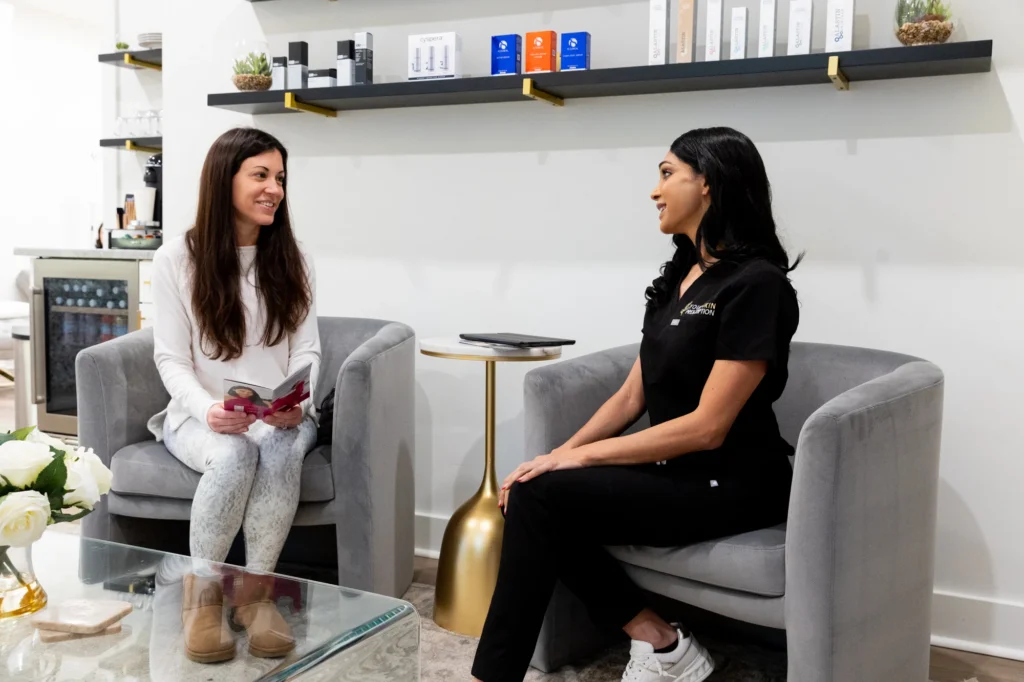
Your visit is designed to feel clear, unrushed, and personalized from the beginning. At Your Skin Prescription, you will first meet with Dr. Damon Hoffmann or another qualified medical provider to discuss your concerns, review your goals, and determine whether PRF microneedling is an appropriate option for your pattern of thinning. This consultation helps place the treatment in the context of your overall scalp and hair health rather than treating every concern with the same approach.
A focused scalp assessment
Your provider will examine the areas where you have noticed thinning or increased shedding and may ask about your health history. Medications, and the timing of your hair changes. This assessment helps identify the areas that may benefit from treatment and gives you an opportunity to ask questions about the process, expected response, and next steps. PRF is a non-surgical regenerative treatment created from a small sample of your own blood. So your provider will also review the procedure and any relevant considerations before beginning.
Blood draw and PRF preparation
A medical professional or Physician Assistant will collect a small blood sample. The sample is then processed to isolate platelet-rich fibrin, or PRF. Preparation takes approximately 10 minutes. Unlike some platelet-based therapies, PRF is prepared without anticoagulants or other additives. The resulting fibrin matrix is intended to provide a natural scaffold that supports the treatment’s regenerative process.
Microneedling for targeted delivery
Once the PRF is ready, a medical aesthetician applies it to the selected thinning areas with microneedling. A topical numbing agent is applied beforehand to help keep the experience comfortable. You may notice pressure, light prickling, or mild sensitivity during the application, but discomfort is generally minimal. The technique allows the PRF to be placed where your provider has identified the greatest need.
Plan for approximately 60 to 90 minutes for the full appointment, including consultation, preparation, and treatment. There is no required downtime, so you can generally return to normal activities afterward. Your provider will give you specific aftercare guidance based on your treatment. To review the service in more detail, visit the PRF microneedling service page.
Results Timeline and Number of Sessions Needed for PRF Hair Restoration
PRF hair restoration is usually planned as a series rather than a single treatment. Many patients are advised to complete three to five sessions, with each appointment spaced approximately four to six weeks apart. This interval gives the scalp time to respond while your provider monitors shedding, density, texture, and overall progress.
What results may look like over time
Every patient responds differently, so your timeline will depend on factors such as the cause and duration of hair loss. Baseline density, overall health, and how consistently you follow aftercare guidance. A general progression may look like this:
- Weeks 4 to 6: Some patients notice less shedding or a change in how much hair they see during washing and styling.
- Months 2 to 3: Hair texture and the appearance of volume may begin to improve. Early changes can be subtle, particularly when thinning has developed gradually.
- Months 3 to 4: Visible new growth may become easier to recognize in areas that are responding to treatment.
- Month 6: This is a useful point for assessing the broader response to an initial treatment plan. In a study of injectable PRF for androgenetic alopecia, an 80% response rate was reported after six monthly sessions, with significant improvements compared with baseline. Review the published study for its full methods and findings.
Planning sessions and maintenance
Your provider may recommend adjusting the number or timing of sessions based on how your scalp responds. A consultation can help determine whether PRF is appropriate for your pattern of thinning and establish realistic milestones for evaluation. Because PRF is a non-surgical treatment that uses components of your own blood, it is intended to support the body’s regenerative processes rather than create an overnight change.
After the initial series, maintenance sessions may be scheduled every six to twelve months when clinically appropriate. These appointments are not automatic, and the best interval depends on your goals and response. If microneedling is part of your broader treatment plan, you can also explore our medical microneedling treatments in Sewickley.
Who Is a Good Candidate for PRF Hair Restoration?
PRF hair restoration may be appropriate for men and women who are noticing early to moderate hair thinning and still have living follicles in the affected areas. Because PRF uses a small sample of your own blood, the treatment is designed to support the scalp’s natural regenerative processes rather than add an artificial substance. It may be considered for several common patterns of hair loss.
- Androgenetic alopecia, also called pattern hair loss.
- Generalized thinning or a widening part.
- Postpartum shedding after pregnancy.
- Temporary, stress-related shedding.
A consultation is important because shedding can have several causes, and PRF is not the right approach for every type of hair loss. Your provider can assess your scalp, discuss your medical history, and determine whether the follicles in the treatment area appear active enough to respond. A published study of injectable PRF for androgenetic alopecia reported an 80% response rate after six monthly sessions. But individual outcomes can vary and research results should not be treated as a guarantee.1
When PRF may not be the best fit
PRF is generally not intended to recreate hair in completely bald areas where follicles are no longer active. It is also unlikely to replace a surgical hair transplant for advanced hair loss, including patterns commonly classified as Norwood 5 through 7. In those situations, your provider may discuss whether another treatment or a referral is more appropriate.
Health considerations before treatment
Candidates should be in generally good health and able to participate safely in a blood-based treatment. PRF hair restoration is typically postponed during pregnancy or nursing. Active scalp infections and certain blood disorders may also make treatment unsuitable or require medical clearance. Be prepared to share your medications, health conditions, recent illnesses, and hair-loss history during the consultation. For patients in Pittsburgh, Sewickley, and nearby communities. A careful evaluation helps ensure that any recommended plan matches the condition of the scalp, the pattern of shedding, and realistic expectations.
Why Choose Your Skin Prescription for PRF Hair Restoration in Pittsburgh
Choosing a regenerative hair treatment is a personal decision. You want thoughtful medical guidance, carefully selected technology, and an experience that feels calm from the first consultation. Your Skin Prescription brings those priorities together for clients throughout Pittsburgh, Sewickley, and the surrounding communities.
Clinical oversight with a personalized approach
Your Skin Prescription was founded by Master Esthetician Rain Hoffmann, whose practice is built around individualized care and a polished, welcoming environment. Medical treatments are overseen by Dr. Damon Hoffmann, Chief of Surgery at Washington Health System. That clinical leadership supports a careful approach to candidacy, treatment planning, and follow-up while keeping the experience warm and personal.
PRF hair restoration is not a one-size-fits-all service. During your consultation, the team can discuss your pattern of thinning, goals, medical history, and whether PRF microneedling is an appropriate option. Because PRF uses components from your own blood, an evaluation is an important part of determining whether the treatment fits your needs.
Advanced technology in an elegant setting
The practice combines advanced medical-grade technology with the relaxing atmosphere of a luxury med spa. This balance is useful when you want a treatment grounded in clinical standards without the rushed or impersonal feel of a high-volume setting. Your session takes place at 634 Beaver St in Sewickley, a convenient location for clients traveling from across the Pittsburgh area.
Care also extends beyond the appointment itself. Your provider can explain what to expect, answer questions about the treatment timeline, and help you understand when follow-up may be appropriate. Results vary, and PRF is not a guarantee against continued hair loss, but a thoughtful plan can help you make an informed decision about non-surgical care.
If you value ongoing access to personalized med spa services, explore the med spa membership program to learn how membership may complement your broader treatment plan.
Frequently Asked Questions
Is PRF hair restoration painful?
Most people describe the treatment as manageable. The process includes a small blood draw followed by scalp microneedling, so you may notice brief sensitivity or a prickling sensation. Your provider can review comfort measures during the consultation and tailor the approach to your needs.
How much downtime does PRF microneedling require?
PRF microneedling is designed as a non-surgical treatment, but your scalp may be mildly tender or appear flushed immediately afterward. Your provider will explain when to resume normal hair and scalp care, along with any activity precautions specific to your treatment.
How many PRF hair restoration sessions will I need?
The recommended number of sessions depends on your pattern of thinning, medical history, and treatment goals. A personalized plan may include a series of visits rather than one appointment. During your consultation, Dr. Damon Hoffmann can assess your scalp and discuss whether PRF is appropriate for you.
How long do PRF hair restoration results last?
Results vary because hair loss has different causes and may continue to progress without ongoing management. Research on injectable PRF for androgenetic alopecia reported an 80% response rate after six monthly sessions, but this study result is not a guarantee for every patient. Review the published study and ask your provider about maintenance planning.
Ready to Explore PRF Hair Restoration?
A consultation can help you understand whether PRF microneedling fits your hair restoration goals and what a personalized treatment plan may involve. Your Skin Prescription offers a thoughtful, medically guided approach for patients in Pittsburgh and Sewickley seeking a non-surgical option for thinning hair. Schedule a consultation for PRF hair restoration at Your Skin Prescription to explore your options.

Rain Hoffmann is the founder of Your Skin Prescription, a modern med spa in Sewickley, PA. With a passion for advanced skincare and aesthetics, she specializes in Korean facials, medical facials, laser treatments, and results-driven skin care. Rain is dedicated to providing a pampering, stress-free experience in an elegant and welcoming environment.