Light-based skin treatments have become a thoughtful option for people who want visible skin support without an invasive procedure or extended recovery. At a Pittsburgh-area medical spa, the right wavelength can be selected according to your concerns, whether that means dullness, early signs of aging, redness, or acne-prone skin.
LED light therapy Pittsburgh uses specific wavelengths of light to support healthy skin functions and address concerns such as fine lines and acne. Its underlying process, called photobiomodulation, uses light to modulate cellular functions and biological processes in a non-invasive way, with minimal side effects reported in medical research (review of photobiomodulation).
Red and blue light are not interchangeable. And understanding what each one is designed to do makes it easier to choose a treatment that feels both relaxing and purposeful. The science begins with how light interacts with the skin and its cells.
Led Light Therapy Pittsburgh: How LED Light Therapy Works
LED light therapy is based on photobiomodulation, a non-invasive process that uses carefully selected light wavelengths to influence cellular functions and biological processes. Rather than abrading or heating the skin, the treatment delivers light energy that skin cells can respond to. This is one reason it has gained attention in both aesthetic and medical applications, with minimal side effects reported in the broader photobiomodulation literature. Research on photobiomodulation continues to examine how light-based protocols may support skin health.
Light gives skin cells a gentle signal
At the cellular level, light interacts with structures called chromophores. These light-sensitive components absorb particular wavelengths and help initiate intracellular signaling pathways. Mitochondria, the structures often described as the cell’s energy centers, are part of the conversation researchers study when evaluating how photobiomodulation may support cellular activity.
In practical terms, the light is not trying to force a dramatic change in the surface of your skin. It is providing a targeted biological signal that may support the skin’s natural processes. The experience remains gentle, and the treatment does not require needles, incisions, or a recovery period.
Red and blue light reach different depths
Wavelength matters because different colors of light travel through tissue differently. Red light generally penetrates farther into the skin than blue light, making it commonly selected for concerns associated with deeper cellular activity and visible signs of aging. Blue light is absorbed closer to the surface, where it is often used in protocols focused on acne-prone skin and acne-causing bacteria. The goal is not simply to choose the brightest light, but to match the wavelength and treatment plan to the concern being addressed.
| Feature | Red Light | Blue Light |
|---|---|---|
| Wavelength range | 620-750 nm | 405-420 nm |
| Penetration depth | Deeper (dermis) | Surface (epidermis) |
| Primary action | Collagen stimulation, anti-aging | Antibacterial, acne fighting |
| Best for | Fine lines, wrinkles, firmness | Acne breakouts, blemishes |
| Key benefit | Supports skin structure and repair | Targets P. acnes bacteria |
| Typical results timeline | Gradual over 8-12 weeks | Improvement in weeks |
From NASA research to modern skin care
Interest in therapeutic LED technology is often connected to NASA-era research into how specific light sources could support biological processes. That early interest helped inspire broader investigation into photobiomodulation, which is now studied for dermatology and aesthetic applications. Today, a professional treatment plan can use the same core principle in a more personalized setting. With wavelength selection and session planning guided by the skin’s needs rather than a one-size-fits-all approach.
For clients exploring LED light therapy Pittsburgh options, the science supports a measured approach: light is non-invasive, but the right color, intensity, timing, and treatment frequency still matter. At a luxury medical spa, those details should be considered alongside your skin history and goals.
Red Light Therapy for Anti-Aging and Collagen Production
Red light therapy is a gentle, non-invasive option for supporting visible skin rejuvenation. Red wavelengths, typically in the 620 to 750 nanometer range, reach the skin and interact with cellular pathways involved in repair and renewal. This process, known as photobiomodulation, uses light to influence cellular functions and biological processes rather than removing or damaging the skin’s surface. Research reviews describe photobiomodulation as a non-invasive approach with potential across medical and aesthetic applications. Read the research on photobiomodulation.
How red light supports firmer-looking skin
One of the most valued effects of red light is its relationship to collagen production. The treatment can stimulate fibroblast activity, encouraging these connective-tissue cells to support collagen formation. Collagen helps provide skin with structure and resilience. As collagen support improves over time, fine lines and wrinkles may appear softer, and skin may look smoother and more supple.
Red light therapy is primarily used to stimulate collagen and improve the appearance of fine lines and wrinkles. That makes it a useful choice for people who want an anti-aging treatment without needles, ablation, or recovery time. Results are gradual rather than immediate, so a personalized series and consistent skin care routine are generally more appropriate than expecting a single session to transform the skin.
Beyond fine lines: tone, circulation, and inflammation
Red light therapy may also complement an overall skin-rejuvenation plan by supporting circulation and helping calm the appearance of inflammation. When skin is less reactive and receives healthy blood flow, the complexion can look more even, refreshed, and balanced. These effects can be especially appealing when dullness, mild redness, uneven tone, or early texture changes are part of the concern.
Published research on LED therapies has also reported improved skin rejuvenation with specific wavelengths, reinforcing the role of light-based treatments as a developing tool in aesthetic dermatology. Because skin concerns and treatment responses vary, a provider should consider your skin condition, goals, sensitivity, and current treatments before recommending a protocol. For those comparing led light therapy pittsburgh options, professional LED light therapy offers a more informed approach than choosing a device based only on marketing claims.
Blue Light Therapy for Acne-Prone Skin
For acne-prone skin, blue light therapy takes a targeted approach. Its antibacterial properties are used to combat acne-causing bacteria on the skin’s surface. Making it a useful option for people who want to address recurring breakouts without an invasive procedure. Rather than relying on a one-size-fits-all protocol, a provider can consider your skin’s condition, sensitivity, and broader treatment goals when deciding whether LED therapy belongs in your plan.
Research supports the value of combining wavelengths for acne care. A systematic review and meta-analysis found that red and blue LED lights played an important role in treating acne vulgaris. With an overall statistically significant standardized mean difference of -2.42. That result supports red and blue combination therapy as an effective, non-invasive approach for acne concerns, while still leaving room for individualized treatment decisions. Read the published meta-analysis on PubMed.
Why combine red and blue light?
Blue light is selected for its antibacterial action, while red light can complement the protocol by supporting skin rejuvenation and the appearance of calmer, healthier-looking skin. Used together, these wavelengths may offer a more comprehensive approach than focusing on one concern alone. LED therapy should not be presented as a guarantee or a replacement for every acne treatment. Persistent, painful, or scarring acne may require a broader medical evaluation and treatment plan.
In Pittsburgh and Sewickley, LED therapy can also be incorporated into a medical-grade facial when clinical techniques are appropriate for your skin. This pairing can connect a soothing facial experience with a more results-oriented approach, under the guidance of licensed medical professionals. Your provider can help determine whether blue light alone, a red and blue combination, or another acne-focused strategy is the most appropriate next step.
What to Expect During an LED Light Therapy Session
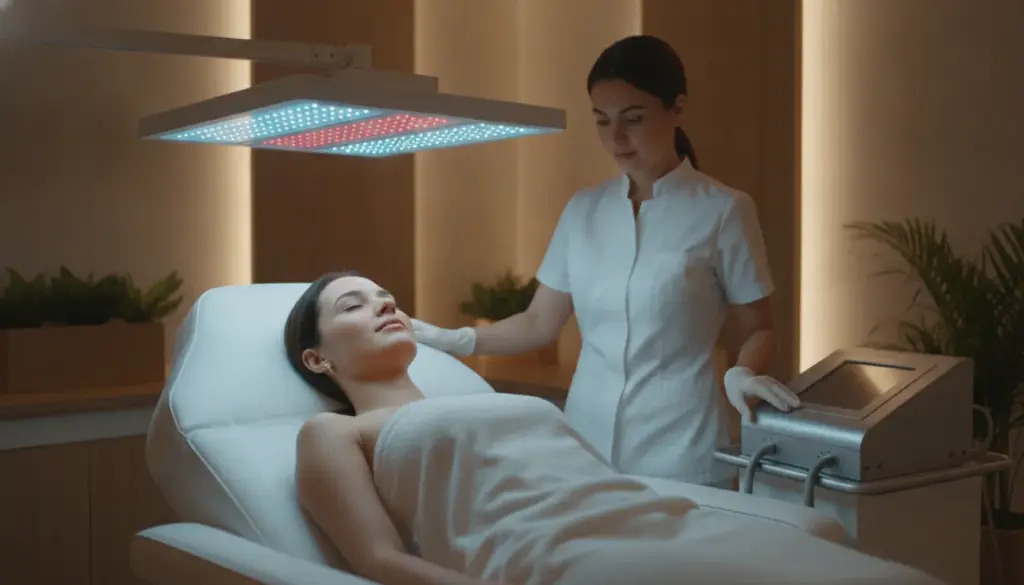
Your appointment is designed to feel as restorative as it is results-focused. After a licensed medical professional reviews your skin goals and treatment plan, you will relax comfortably while LED panels are positioned over the treatment area. At Your Skin Prescription, treatments are conducted by licensed medical professionals, supporting a careful, clinically informed experience.
A calm, comfortable treatment
LED light therapy is painless and non-invasive. Most clients simply lie back and enjoy a quiet moment while the light is delivered to the skin. A typical session lasts approximately 20 to 30 minutes. You may notice the gentle glow of the panels, but there is no need to prepare for discomfort, needles, or an extended recovery period.
There is no downtime after treatment, so you can return to your normal schedule when your appointment is complete. Your provider will still guide you on any skin-specific recommendations, including how LED therapy fits into your broader care plan. The approach is personalized for clients in Sewickley, Pittsburgh, and surrounding communities, rather than treating every complexion the same way. Learn more about LED light therapy as part of a tailored skin care routine.
Standalone or part of a larger plan
LED light therapy may be scheduled as a standalone service or added to another treatment, such as a facial or microneedling appointment, when appropriate for your skin. Combining treatments can make it easier to build a consistent plan around your concerns, schedule, and desired level of care. If you are comparing local options, explore this guide to LED light therapy treatments in the Pittsburgh and Sewickley area.
For clients who value regular care, a subscription or med spa membership may also be worth discussing. Consistent appointments can help you stay engaged with a personalized regimen, while your provider adjusts recommendations as your skin changes. Your Skin Prescription combines advanced medical aesthetics with a relaxing, elegant environment, so the experience feels intentional from consultation through follow-up.
Combining LED Light Therapy With Other Treatments
LED light therapy can stand on its own, but it is also a remarkably versatile addition to a thoughtfully designed skin treatment. At Your Skin Prescription, your provider can consider how light therapy fits with your broader goals. Whether you want a brighter post-facial glow, support during a collagen-focused plan, or a soothing step within a more comprehensive acne regimen.
Pairing LED With Medical Facials
Adding LED to a medical facial, such as a HydraFacial or Korean facial, creates a layered experience. The facial addresses cleansing, exfoliation, hydration, and targeted topical care, while the light treatment provides a calming, non-invasive finishing step. The combination can leave skin looking refreshed and luminous without adding meaningful recovery time.
Medical-grade facials often differ from standard spa facials because they use more clinical, results-oriented techniques, including light-based therapies. Learn more about medical facials and how their approach may differ from a traditional facial.
Supporting Microneedling and PRF Microneedling
LED is also commonly combined with microneedling and PRF microneedling. These treatments are designed to encourage visible skin renewal and collagen support, while LED can serve as a gentle, restorative complement during the same overall treatment plan. Your provider may recommend it to help support the skin’s recovery after a collagen-focused procedure, depending on your skin, treatment settings, and goals.
Because personalized treatment plans are central to effective skin care in a professional medical spa, the right combination depends on an assessment rather than a fixed formula. Factors such as sensitivity, active breakouts, recent procedures, and your desired timeline all matter. LED light therapy is non-invasive and generally fits comfortably into a plan focused on results without additional downtime. But your provider will determine the most appropriate sequence and frequency.
If you are exploring options in the area, our guide to LED light therapy treatments explains how this service can fit within the broader med spa experience in Pittsburgh and Sewickley.
Frequently Asked Questions
Is LED light therapy good for your skin?
LED light therapy is a non-invasive option for addressing several common skin concerns, including visible signs of aging, uneven tone, redness, and acne. The appropriate light color depends on your goals: red light is commonly used to support collagen and skin rejuvenation. While blue light is selected for its antibacterial action against acne-causing bacteria. A licensed medical professional can help determine whether the treatment complements your current skin care plan.
How often should you get LED light therapy for your face?
The ideal schedule depends on your skin concerns, sensitivity, and whether LED is being used alone or alongside another treatment. Rather than following a one-size-fits-all routine, discuss frequency with your provider at your consultation. Your plan can then be adjusted as your skin responds, with attention to comfort, consistency, and your broader treatment goals.
Does LED light therapy work for anti-aging?
Red light therapy is primarily used to stimulate collagen and reduce the appearance of fine lines. It also supports skin rejuvenation through light-triggered cellular pathways. Results are gradual and vary by person, so LED is best viewed as part of a consistent. Personalized skin care strategy rather than a guarantee of a specific outcome.
Can LED light therapy help acne-prone skin?
Blue light therapy is used for its antibacterial properties and may help address acne-causing bacteria. Red and blue LED treatments have also been studied together for acne vulgaris, with a systematic review and meta-analysis reporting statistically significant findings: PubMed research. Your provider can recommend whether blue light, combined light therapy, or another approach is appropriate for your skin.
What is an LED light therapy session like?
LED light therapy is designed to be non-invasive and comfortable, with no required downtime in the treatment approach offered at Your Skin Prescription. Sessions are performed by licensed medical professionals and may be used as a standalone service or incorporated into a personalized plan in the Sewickley and Pittsburgh area.
Ready to Explore LED Light Therapy?
A personalized LED session can be a soothing way to support your skin goals with focused, professional care. To book an LED light therapy session at Your Skin Prescription in Sewickley, call 412-386-4204. Our team can help you take the next step toward a treatment experience tailored to your skin.