Stretch marks are remarkably common, especially after pregnancy, growth, or significant changes in the body. In fact, approximately 90% of women develop them during the final months of pregnancy. While these linear scars are harmless, their texture and color can remain noticeable long after the skin has stopped stretching.
For patients seeking microneedling for stretch marks Pittsburgh, professional microneedling can encourage the skin’s natural collagen response and soften the appearance of stretch marks over time. RF microneedling with Morpheus8 adds controlled radiofrequency energy, offering another customizable approach for body skin that may also benefit from improved firmness.
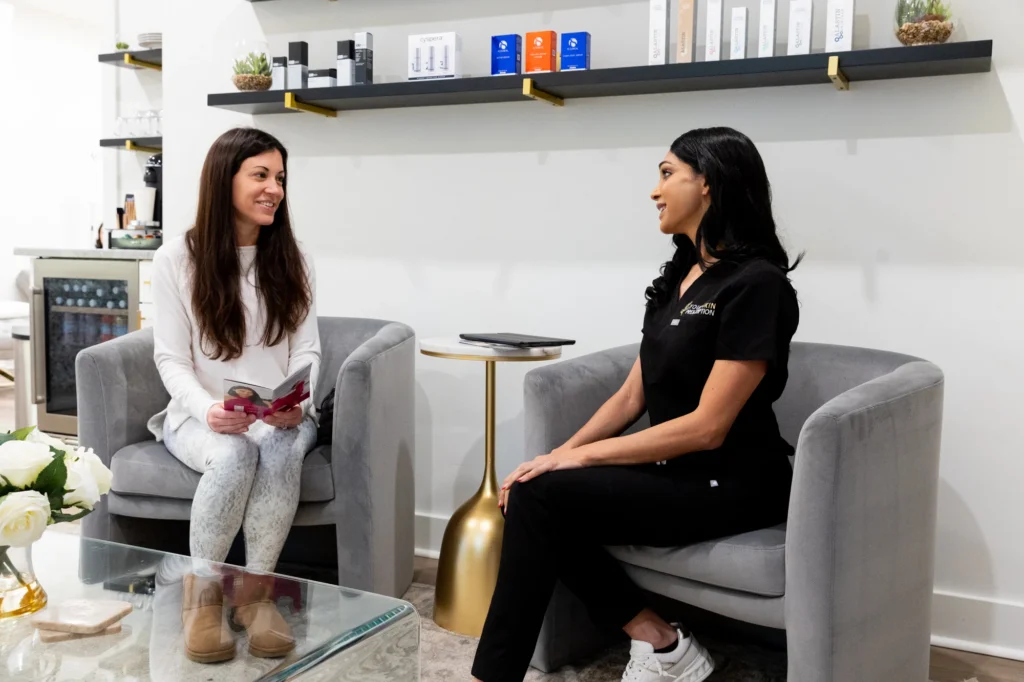
At Your Skin Prescription in Sewickley, treatment planning begins with understanding your skin, the age and location of your stretch marks, and the results you hope to achieve. First, it helps to understand what stretch marks are and why they form.
Understanding Stretch Marks and How They Form
Stretch marks, medically known as striae distensae, are a type of linear scar that develops when the skin stretches beyond what its deeper supportive structures can accommodate. They are common, but that does not make them emotionally easy to live with. Changes in texture or color can affect how comfortable you feel in clothing, swimwear, or your own skin.
The underlying process begins in the dermis, the layer of skin that contains collagen and elastin fibers. When the skin undergoes rapid or disproportionate stretching, the dermis can become damaged, leaving visible lines as the tissue repairs itself. A systematic review describes stretch marks as linear dermal scars associated with excessive skin stretching, rather than a sign that the skin is unhealthy or improperly cared for. Read the clinical review on striae distensae.
Where stretch marks commonly appear
Stretch marks can develop anywhere the body changes quickly. Common areas include the abdomen, hips, thighs, upper arms, breasts, buttocks, and lower back. Their appearance may vary from pink, red, or purple lines to lighter silvery marks. Newer marks often have more noticeable color, while older marks may be paler and slightly indented.
Who is most likely to develop them?
Pregnancy is one of the most familiar causes. Approximately 90% of women develop stretch marks during the final months of pregnancy. Adolescents may notice them during rapid growth spurts, and they can also appear when muscle mass increases quickly, including in some bodybuilders. Genetics, hormones, skin elasticity, and the pace of physical change may all influence an individual’s likelihood of developing them.
Stretch marks are not limited to one body type, age, or skin tone. When treatment is considered, skin phototype matters because some procedures carry a greater risk of post-inflammatory hyperpigmentation. Research on microneedling supports its use across a range of skin phototypes, including darker skin tones. Because it does not rely on thermal injury in the same way some resurfacing treatments do. That does not mean every person or mark will respond identically, and no treatment can promise complete removal. A careful consultation helps determine whether microneedling is an appropriate option for your skin and goals.
How Microneedling for Stretch Marks in Pittsburgh Works
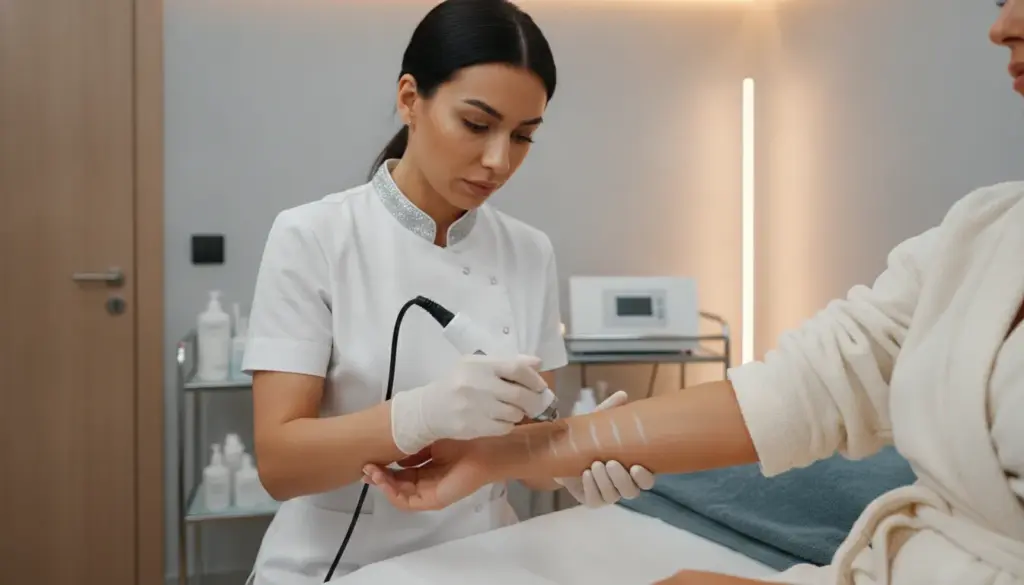
Microneedling, also called collagen induction therapy, uses a device with very fine, medical-grade needles to create controlled micro-injuries in the skin. These tiny channels do not remove the stretch mark. Instead, they encourage the body’s natural wound-healing response, which can stimulate new collagen and elastin production. As the skin remodels, the texture and contrast of stretch mark tissue may gradually become less noticeable.
Stretch marks are a form of dermal scarring, so improvement depends on how your skin responds and on the age, depth, and location of the marks. In a clinical study, all treated striae showed at least 50% improvement after an average of 1.8 treatments, while 28% of patients experienced more than 75% clinical improvement. These findings are encouraging, but they are not a guarantee of the result any individual will receive. A personalized assessment helps determine whether traditional microneedling, RF microneedling, or another approach best fits your goals.
What the treatment feels like
During a session, you may feel a repetitive prickling or vibrating sensation as the device moves across the treatment area. Some areas can feel more sensitive than others, and the experience varies with the location of the stretch marks and your individual comfort level. Your medical aesthetician can discuss comfort measures and aftercare before treatment so you know what to expect. Temporary redness is a typical short-term response. In the clinical evidence reviewed for stretch mark treatment, side effects were limited to transient erythema, with no infections or dyspigmentation observed.
Why microneedling can suit darker skin tones
Because traditional microneedling creates mechanical micro-injuries without thermal injury, it can be a viable option across a range of skin phototypes, including darker skin tones. Research notes a reduced risk of post-inflammatory hyperpigmentation compared with treatments that rely on heat. Your provider will still evaluate your skin carefully, review your medical history, and plan treatment parameters for the specific body area.
If you would like to understand the general recovery process, read about traditional microneedling in Pittsburgh. You can also explore the practice’s microneedling services to learn how a consultation at Your Skin Prescription may support your stretch mark treatment plan.
RF Microneedling with Morpheus8 for Stretch Marks in Pittsburgh
For stretch marks that involve both surface texture and changes in skin firmness, RF microneedling with Morpheus8 offers a more layered approach than traditional microneedling alone. The device uses precisely placed microneedles to create controlled micro-injuries, then delivers radiofrequency energy into the tissue. This combination supports collagen remodeling while adding heat below the surface, where it can help encourage a firmer appearance.
How Morpheus8 works on body stretch marks
Stretch marks are a type of dermal scar, so treatment needs to address more than the outermost layer of skin. With Morpheus8, a medical aesthetician can customize needle depth according to the treatment area, the thickness of the skin, and the appearance of the marks. The system can be adjusted to penetrate up to 4 mm and is FDA-cleared for treatment on both the face and body.
That flexibility matters when treating areas commonly affected by stretch marks, including the abdomen, thighs, hips, buttocks, and upper arms. A Pittsburgh-area treatment plan may use different settings across the body rather than applying a single approach everywhere. During a consultation, the provider can assess skin laxity, scar texture, color. And your goals before recommending whether traditional microneedling, RF microneedling, or a combination makes the most sense.
What the evidence suggests
Research on microneedle radiofrequency for striae distensae found significant clinical improvement in the RF treatment subgroup, with a standardized mean difference of 0.57 and P = 0.003. The same systematic review found that microneedling was associated with higher patient satisfaction than laser and non-laser treatments, although individual responses vary. These findings support RF microneedling as a clinically considered option, not a promise that every mark will disappear.
For a closer look at treatment design, depth, and recovery, read the Morpheus8 treatment guide. You can also explore RF microneedling with Morpheus8 at Your Skin Prescription in Sewickley, serving clients throughout Greater Pittsburgh.
Downtime and when results appear
Morpheus8 typically involves about 3 to 5 days of downtime, during which redness, sensitivity, or a rougher texture may be noticeable. Early changes may become visible around three weeks, while the most developed results are expected around three months as collagen remodeling continues. Your Pittsburgh provider will explain aftercare and help determine whether a series of treatments is appropriate for your stretch marks.
What to Expect: Sessions, Recovery, and Results
A stretch mark treatment plan is usually paced around your skin’s remodeling process rather than rushed into a single appointment. Many patients are advised to plan for three to five microneedling sessions, spaced about one month apart, to support the strongest overall response. Your medical aesthetician can recommend a more tailored schedule after considering the age, color, depth, and location of the stretch marks.
How long does each appointment take?
Traditional microneedling is minimally invasive, and an appointment typically takes about 30 minutes. The exact timing can vary by treatment area and whether preparation, numbing, or aftercare instructions are included in the visit. Body areas such as the abdomen, thighs, hips, or upper arms can be addressed according to your goals and the treatment plan developed during your consultation.
If you are considering traditional microneedling in Pittsburgh, reviewing the treatment process and recovery expectations in advance can help you plan comfortably around work, travel, or special events.
What is recovery like?
Most people should expect temporary redness after microneedling. In a clinical study of microneedling for stretch marks, side effects were limited to transient erythema, with no infections or dyspigmentation observed in the study group. Your provider will explain how to care for the treated skin and when to resume your usual products and activities. Because every skin type responds differently, follow the individualized aftercare guidance rather than assuming that a friend’s recovery will be identical to yours.
When will results become visible?
Some improvement may be visible after the first session, but results generally develop progressively as the skin produces and reorganizes collagen over the following months. One published study reported at least 50% improvement after an average of 1.8 microneedling treatments. Although individual outcomes vary and this finding should not be treated as a guarantee.
For Morpheus8 RF microneedling, visible changes may appear around three weeks, with optimal results typically assessed at approximately three months. The treatment may involve three to five days of downtime, so your consultation should include timing around photographs. Celebrations, or other occasions when you want the skin to look fully settled.
Microneedling for Stretch Marks vs. Laser and Other Treatments
Traditional microneedling, RF microneedling with Morpheus8, and fractional laser can each be considered for stretch marks. The right option depends on skin tone, texture, laxity, treatment goals, and how much recovery time fits your routine. A systematic review found comparable effectiveness between microneedling and laser treatments, with no statistically significant difference between the two groups (P = 0.35). Patient satisfaction favored microneedling over laser treatment in the available analysis (P = 0.04). Learn more about microneedling and RF microneedling differences before choosing a treatment plan.
| Consideration | Traditional microneedling | RF microneedling (Morpheus8) | Fractional laser |
|---|---|---|---|
| Mechanism of action | Controlled micro-injuries stimulate the skin’s natural collagen remodeling process. | Combines collagen induction from microneedling with thermal RF energy for added skin tightening. | Creates fractional zones of heat in the skin to support resurfacing and collagen remodeling. ResurFX uses a 1565 nm fiber laser. |
| Depth of treatment | Needle depth is adjusted to the treatment area and skin characteristics. | Morpheus8 offers customizable penetration up to 4 mm for body treatment. | Laser energy is delivered in fractional columns at a depth selected by the provider. |
| Number of sessions | Often planned as 3 to 5 sessions, usually about one month apart. | Often planned as 3 to 5 sessions, based on laxity, texture, and response. | Often planned as 3 to 5 sessions, depending on the laser and treatment goals. |
| Downtime | Typically mild redness that resolves as the skin recovers. | Commonly about 3 to 5 days of visible recovery. | Varies with the laser settings, skin type, and treatment area. |
| Best for which skin types | Often a strong option for darker skin tones because it does not rely on thermal injury and has a lower hyperpigmentation risk. | Can be customized, but RF energy requires careful provider assessment for every skin tone. | May be appropriate for selected patients after assessment of skin tone and pigment risk. |
| Patient satisfaction | Reported as higher than laser and non-laser options in the cited review. | Satisfaction was comparable with laser in the cited analysis. | Effective for many patients, although satisfaction varies by treatment and individual response. |
| Typical results timeline | Texture changes develop gradually as collagen remodels across the treatment series. | Some improvement may be visible around three weeks, with optimal results often assessed around three months. | Results develop progressively as treated skin remodels after each session. |
For patients with darker skin, traditional microneedling’s lower risk of post-inflammatory hyperpigmentation can be an important clinical consideration. A consultation allows a medical aesthetician to compare these options in the context of your stretch marks, skin tone, and desired level of tightening.
Why Choose Your Skin Prescription for Microneedling for Stretch Marks in Pittsburgh
Choosing a stretch mark treatment is personal. You deserve a thoughtful evaluation, a clear explanation of your options, and care that feels as considered as the treatment itself. At Your Skin Prescription in Sewickley, every plan is shaped around your skin, the areas you want to address, and your comfort throughout the process.
Personalized care from an experienced medical aesthetician
Founded by Master Esthetician Rain Hoffmann, Your Skin Prescription brings together advanced skin treatments and a calm, luxurious setting. Rather than treating every stretch mark the same way, your medical aesthetician can assess the texture, age, location. And appearance of your marks before discussing whether traditional microneedling, RF microneedling, or a combination approach is the most appropriate fit.
This individualized approach is especially valuable for body areas such as the abdomen, thighs, hips, or arms. Stretch marks can vary significantly from one area to another, so treatment depth and technique should be selected with care. The goal is gradual, natural-looking improvement that supports healthier, more even-looking skin without promising perfection.
Traditional microneedling and Morpheus8 body treatments
Your Skin Prescription offers both traditional microneedling and Morpheus8 RF microneedling for clients across Greater Pittsburgh. Morpheus8 combines controlled microneedling with radiofrequency energy and is FDA-cleared for face and body treatments. Its penetration depth can be customized up to 4 mm, allowing your provider to tailor treatment to the body area and the needs of your skin. You can learn more about RF microneedling with Morpheus8 before your consultation.
From your first conversation through recovery, the experience is designed to be both clinically grounded and genuinely relaxing. If you are considering microneedling for stretch marks in the Pittsburgh area, contact Your Skin Prescription in Sewickley to discuss your goals and create a treatment plan with a qualified professional.
Frequently Asked Questions
Can microneedling improve older stretch marks?
Microneedling can soften the appearance of stretch marks by encouraging a controlled skin-renewal response. Published clinical evidence found at least 50% improvement after an average of 1.8 treatments, although results vary by the maturity, color, texture, and extent of the marks. A consultation can help determine whether traditional microneedling or RF microneedling is the better fit for your skin.
Which body areas can be treated?
Stretch marks on the abdomen, thighs, buttocks, arms, and other appropriate body areas may be considered. Research found that marks on thicker skin regions, including the buttocks and thighs, improved comparably with marks on thinner skin areas after microneedling. Your medical aesthetician will assess the skin and treatment area before recommending a plan.
Is microneedling for stretch marks painful?
Most patients experience temporary warmth, pressure, or prickling during treatment. Published research found microneedling caused more discomfort than some laser treatments, so comfort planning matters. Your provider can discuss topical numbing and practical aftercare steps during your consultation. RF microneedling may feel different because it combines needle-based treatment with radiofrequency energy.
How much does stretch mark microneedling cost in Pittsburgh?
The investment depends on the body area, the size and number of treatment zones, and whether you choose traditional microneedling or Morpheus8. Because every plan is customized, an in-person consultation is the most reliable way to receive treatment recommendations and current pricing for your needs.
What should I expect after treatment?
Temporary redness is a common short-term response, and you will receive individualized instructions for caring for the treated skin. Research on microneedling for stretch marks reported transient redness without observed infections or dyspigmentation in the study population. Allow your provider to guide the timing of exercise, sun exposure, and active skin-care products after your appointment.
Ready to Explore Stretch Mark Treatment?
A consultation can help you understand whether traditional microneedling or RF microneedling with Morpheus8 is the better fit for your skin, treatment goals, and preferred recovery timeline. Your Skin Prescription can create a personalized plan for care in Sewickley, serving clients throughout Pittsburgh. Schedule a consultation for microneedling or Morpheus8 stretch mark treatment.