
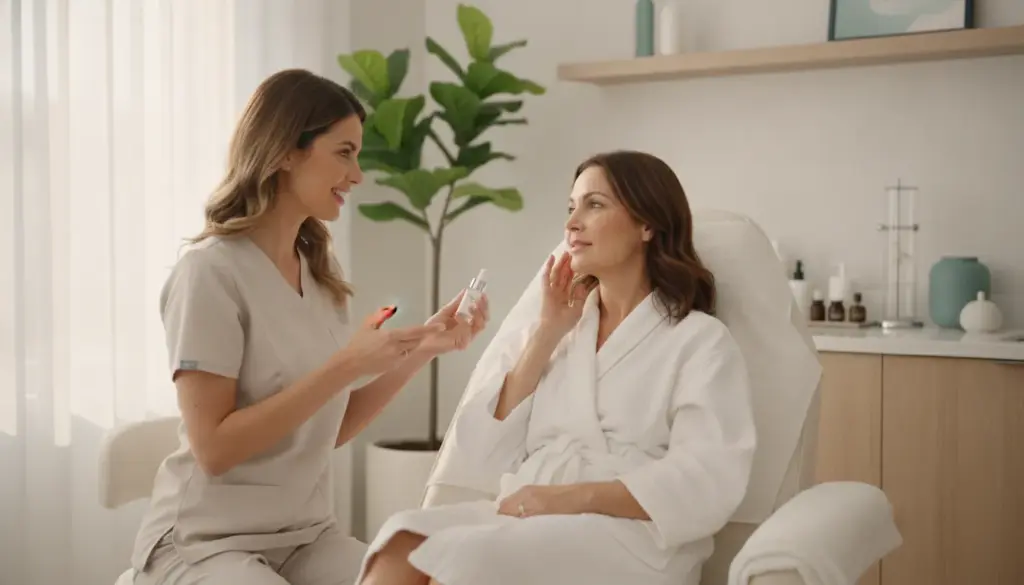
— title: AdvaLight vs chemical peel Pittsburgh guide metaTitle: AdvaLight vs Chemical Peel Pittsburgh | Skin Guide description: >- Compare AdvaLight vs chemical peel Pittsburgh options for pigmentation, acne and texture. Explore sensitivity and recovery factors to discuss with a provider. excerpt: >- Compare AdvaLight vs chemical peel Pittsburgh options for pigmentation, acne and texture. Explore sensitivity and recovery factors to discuss with a provider. subtitle: >- Compare AdvaLight vs chemical peel Pittsburgh options for pigmentation, acne and texture. Explore sensitivity and recovery factors to discuss with a provider. slug: advalight-vs-chemical-peel-pittsburgh image: >- https://zleague-public-prod.s3.us-east-2.amazonaws.com/article_images/a70f9ae5-24f7-4cc5-9a15-24931cfc4091/advalight-vs-chemical-peel-pittsburgh-guide-542512.webp imageAlt: >- Medical aesthetician discussing personalized skin treatment options with a patient targetKeyword: advalight vs chemical peel pittsburgh — .
When pigmentation, breakouts or uneven texture are on your mind, the treatment name matters less than what your skin needs and what recovery you can realistically manage. For Pittsburgh-area patients, that comparison deserves a personalized conversation, not a one-size-fits-all recommendation.
Contact Your Skin Prescription to discuss your skin-care goals
The AdvaLight vs chemical peel Pittsburgh comparison has no universal winner. AdvaLight is a light-based option the practice lists for concerns including pigmentation and acne, while customized peels are selected around skin type, sensitivity, goals and downtime tolerance. A provider can help weigh those factors for your individual skin.
The decision becomes clearer when you understand how a device-based treatment differs from a peel and why the same concern may call for different considerations depending on your skin and priorities.
How to compare AdvaLight vs chemical peel Pittsburgh treatments
These treatments take different routes toward skin goals. AdvaLight is a light-based device treatment, while a chemical peel uses a topical solution to exfoliate skin in a controlled way. Neither description alone determines which option is right; the concern being treated, your skin history, and your preferences all matter.
Your Skin Prescription describes AdvaLight as a dual-wavelength laser using 589 nm and 1319 nm wavelengths, and lists it for concerns including pigmentation and acne. This is the practice’s treatment information, not a promise of the same response for every skin type. The clinic’s laser service page explains its AdvaLight offering. A provider can discuss whether it fits your goals.
A chemical peel is not one single formula or intensity. A chemical substance is applied to create controlled skin damage, prompting skin regeneration and remodeling; peel types differ in formulation, application, treatment time and associated risks. These differences are why the word “peel” alone does not tell you how intensive a treatment will be or what recovery will involve. Clinical guidance recommends assessing skin condition, sensitivity and medical history before selecting an agent and concentration.
The practice describes its medical-grade peels as customized around skin type and sensitivity, concerns, downtime tolerance, and treatment goals. Its options range from light peels intended for glow enhancement to medium peels listed for texture and pigmentation, with deeper options also available. The formulation and depth influence the treatment plan, so a peel should be discussed as a particular option rather than as a generic alternative to a device.
For someone comparing AdvaLight and peels in Pittsburgh, the key distinction is a device-based light treatment versus topical chemical exfoliation. A literature review found mixed results across laser and peel categories, but it does not establish that AdvaLight is more effective than a peel.
When you speak with a provider, describe the change you hope to address, previous treatment reactions, and how much recovery time feels manageable. This context helps make the comparison specific to you rather than relying on a general ranking of two different treatment categories.
Which option may fit pigmentation, acne or texture goals?
The concern you want to address matters more than a simple laser-versus-peel label. Your Skin Prescription lists AdvaLight for pigmentation and acne, while its medium peels are offered for pigmentation and texture concerns. Those descriptions can help frame a conversation, but they are not a guarantee of results or a diagnosis of which treatment is right for you.
How the options relate to common skin concerns
| Uneven pigmentation | AdvaLight: the practice lists pigmentation among its concerns. | Chemical peel: the practice lists medium peels for pigmentation; peel type and suitability depend on individual assessment. |
| Active acne | AdvaLight: the practice lists acne as a concern, but does not publish a specific acne protocol or outcome. | Chemical peel: Mayo Clinic includes acne among concerns for light peels. This does not establish that every peel is suitable for every person. |
| Acne scars or uneven texture | AdvaLight: the practice information does not specify outcomes for acne scars. | Chemical peel: Mayo Clinic lists acne scars as a use for medium peels, and the practice lists medium peels for texture. The depth and expected recovery require discussion. |
Active acne and acne scars are not interchangeable. Active breakouts involve current lesions; scars and lingering texture changes remain after breakouts settle. The practice’s AdvaLight information names acne, not acne scarring, so ask about the specific concern rather than assuming those indications are the same. For scar-focused options, see the practice’s laser options for acne scars in Pittsburgh.
Evidence comparing broad treatment categories should also be interpreted carefully. A review reported no significant efficacy difference between laser and peel treatments for acne or acne scarring overall. Those findings do not establish that AdvaLight itself was studied or predict an individual result. The same review reported a laser advantage for melasma, but that result covers laser treatments as a category, not a specific AdvaLight protocol. It is not enough on its own to select a device for a particular pigment concern (review of lasers and chemical peels).
General medical guidance distinguishes peel depth: light peels may be used for acne and uneven tone, while medium peels may be used for acne scars and uneven tone. In practice, a broad label such as “pigmentation” does not tell you which approach or peel depth fits. The exact type of discoloration, whether breakouts are active, and whether texture changes are scars all affect the discussion.
For a broader look at the practice’s peel options and stated goals, review chemical peel benefits for pigmentation. A provider can consider your skin, treatment history and priorities before discussing whether a peel, AdvaLight or another approach makes sense.
How do sensitivity and skin tone affect the decision?
Skin tone, sensitivity and a history of lingering marks matter because irritation can leave behind discoloration, and the same treatment may not suit every person. Post-inflammatory hyperpigmentation (PIH) is darkening that can follow inflammation or skin injury. A provider should consider your current skin condition, past reactions and goals before recommending a light-based treatment or a peel. Mention whether you have developed dark marks after acne, a rash or another minor irritation. This pattern can inform the conversation even though it does not, by itself, determine which treatment is appropriate.
For a chemical peel, the formulation and depth are part of that decision. Peels can cause treated skin to become darker or lighter. The risk of pigment changes is higher for people with brown or black skin; these changes can sometimes be lasting. A peel is not automatically unsuitable. The provider’s experience with your skin tone and a carefully selected approach are important. The American Academy of Dermatology’s chemical peel FAQ discusses these considerations.
Light-based treatments also need individualized assessment. AdvaLight is a distinct device, so a provider should assess the specific treatment settings, your skin tone and your treatment history rather than assume that all light-based options behave alike. Ask which precautions apply to your skin and what changes should prompt you to contact the practice.
Your Skin Prescription lists AdvaLight as suitable for sensitive skin, but that is clinic-specific information, not a guarantee that it is right for every sensitive skin type or concern. The practice also selects customized peels with skin type and sensitivity in mind. Tell your provider about prior irritation, pigment changes, active skin concerns, recent treatments and products or medications that may affect your skin. These details help shape an appropriate discussion, but they do not replace an in-person assessment.
Before deciding, ask what signs would prompt postponing treatment, what precautions are appropriate for your skin tone, and what recovery changes to watch for. For more detail on chemical peel sensitivity and recovery, review the practice’s guide. A personalized assessment is more useful than choosing by device name or assuming one option is gentler for everyone.
What should you expect from recovery and treatment planning?
Recovery is not a single timeline shared by every light treatment or peel. The practical difference is that peels come in different depths and formulations. The practice’s published AdvaLight information describes no downtime, but does not specify a treatment schedule or detailed recovery course. Treat that as the clinic’s general service information, not a promise about how your skin will respond. A provider can explain what to expect for your specific concern and skin.
Peel depth can shape both the healing period and the calendar you need to reserve. Your Skin Prescription lists light peels for glow with minimal downtime, medium peels for texture and pigmentation, and deep peels for significant rejuvenation, with 7-10 days of downtime noted for deep peels. Its offerings also list BioRePeel as having no traditional downtime and VI Peels as medium-depth with minimal downtime. These descriptions apply to particular offerings, not all peels or all patients. The practice lists a course of three to six peel sessions, but that is not a recommendation for every person or peel.
General medical guidance also illustrates why it helps to ask about the exact peel. The American Academy of Dermatology describes healing after refreshing peels as potentially taking 1-7 days, medium peels as 7-14 days, and deep peels as 14-21 days. These are broad categories, and the estimates should not be treated as a substitute for the plan your provider recommends. AAD guidance notes that light or medium peels may be repeated, while timing and need depend on the individual treatment plan. Follow the aftercare instructions you receive; AAD guidance includes keeping skin moisturized as it heals and using sunscreen afterward, with sun avoidance until healing for medium peels.
For AdvaLight, the practice does not publish a specific number of sessions or a detailed recovery schedule. Avoid planning around a fixed course until a provider has assessed your goals and explained the expected response and spacing. Ask what visible changes may occur, what care to follow at home, and when you can resume your usual routine. If work, travel, or an event makes downtime difficult, mention that before choosing; the plan should fit your real calendar as well as your skin-care goals.
Review the practice’s chemical peel options and AdvaLight service information, then confirm the details directly with a provider.
How can you compare the options before choosing?
A useful comparison starts with what you want to address and what your skin has experienced before, not with a promise that one treatment is best for everyone. Your provider can consider your skin type, condition and tolerance for side effects when discussing options. Learn about the practice’s AdvaLight service and customized chemical peels in Sewickley as a starting point, not as a substitute for an individual assessment.
- Name your main concern. Be as specific as you can: uneven pigmentation, active acne, lingering marks, or texture may lead to different questions. Clarify whether you mean active breakouts or acne scars; do not assume the same option addresses both. Ask what each approach is intended to address in your case.
- Describe prior skin reactions. Tell the provider about past irritation, prolonged redness, peeling, or pigment changes after treatments or products. Share what caused the reaction if you know, how long it lasted, and what helped. A history of sensitivity is useful context, not a diagnosis or an automatic decision against either option.
- Discuss skin tone and pigment-change concerns. Ask how your skin tone and history of dark or light marks affect the risks and choice of treatment. Chemical peels can cause pigment changes, so individualized assessment and provider experience matter. Ask how the selected approach would be adjusted to your circumstances.
- Map recovery to your schedule. Consider work, events, caregiving, and how much visible redness, flaking, or other recovery you can accommodate. Peel type influences recovery, so ask what is realistic for the specific peel being considered. Do not plan around a generic downtime estimate.
- Review sun exposure and aftercare. Mention regular outdoor activities, upcoming travel, and whether you can follow the recommended sun-protection and aftercare instructions. Ask when to resume normal activities and what changes would warrant contacting the practice.
- Bring your product and medication list. Include prescriptions, over-the-counter products, supplements, and recent skin treatments. Ask which products or medicines may need to be paused or adjusted, and when; do not stop prescribed medication without guidance from the prescribing professional.
- Ask for the reasoning and alternatives. At a consultation, ask why a provider recommends AdvaLight, a particular peel, or neither. Ask what benefits and risks apply to you, what recovery and follow-up could involve, and what other options may fit. The practice’s chemical peel sensitivity and recovery guidance can help you prepare questions.
Contact Your Skin Prescription to discuss your skin-care goals with the team.
Frequently Asked Questions
How do I choose between a light-based treatment and a chemical peel?
Start with the concern you want to address, your skin history, and how much recovery time you can accommodate. AdvaLight is listed by the practice for concerns including pigmentation and acne, while peel formulations and depths can be tailored to different goals. A provider can help weigh those differences for your skin.
Can either option help with active acne and acne scars?
The practice lists AdvaLight for acne, and some chemical peels may be used for acne. Active breakouts and acne scars are different concerns. The practice does not specify AdvaLight outcomes for acne scarring, so discuss the type of marks or scars you have before choosing a treatment.
How much recovery time should I plan for?
It depends on the specific peel and its depth; deeper peels generally take longer to heal than lighter ones. The practice describes AdvaLight as having no downtime, but individual responses can vary. Ask your provider what visible redness, peeling, or activity adjustments are realistic for the recommended plan.
Is one option safer for sensitive skin or pigmentation concerns?
There is no universal answer. The practice describes AdvaLight as suitable for sensitive skin, but suitability still needs an individual assessment. Chemical peels can sometimes cause darker or lighter patches, and the Mayo Clinic notes pigment changes are more common in people with brown or black skin. Share your skin history and prior reactions with your provider.
Can AdvaLight and a peel be combined?
A combined approach should not be assumed or scheduled without a provider’s recommendation. The right sequence, if any, depends on your skin, treatment goals, and tolerance for side effects. Ask whether one option should be tried first and what signs would guide a decision about any later treatment.
Ready to discuss your skin treatment options?
Choosing between AdvaLight and a customized chemical peel may depend on your main concern, skin sensitivity and how much recovery time fits your routine. A conversation can help you explain your priorities and ask about options without assuming one treatment is right for everyone.
Contact Your Skin Prescription to discuss your skin treatment options.