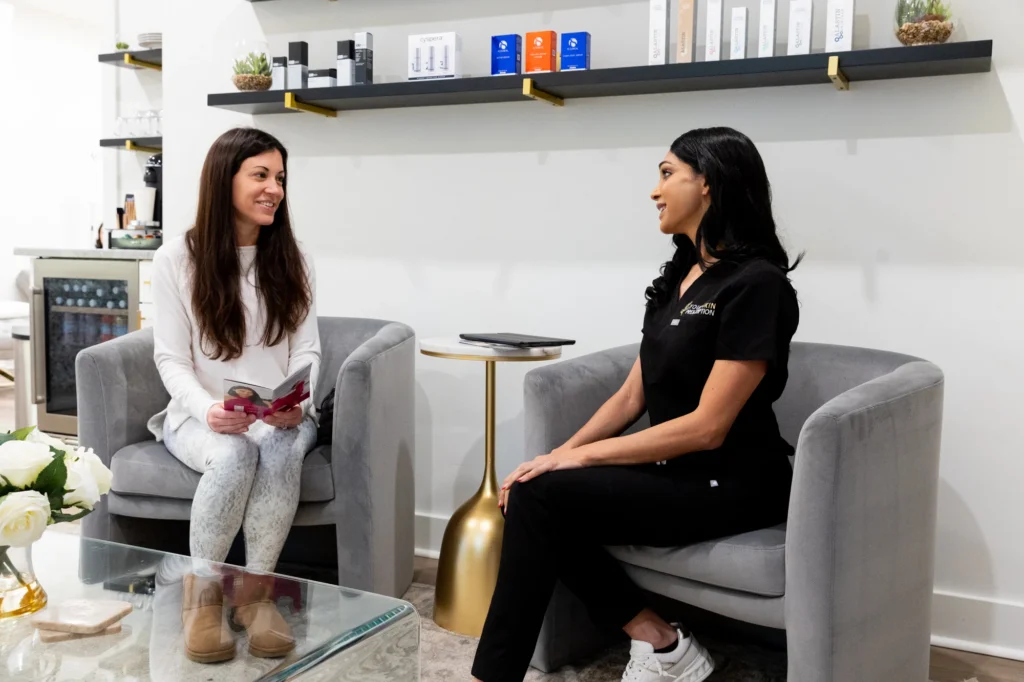

When comparing PRF vs Sculptra in Pittsburgh, the key difference is not simply which option is more effective. Platelet-rich fibrin (PRF) is made from a patient’s own blood, while Sculptra is an injectable poly-L-lactic-acid biostimulator. They work differently, follow different treatment plans and may suit different goals. The right discussion starts with the concern you want to address and a qualified provider’s assessment.
Book a personalized consultation
PRF vs Sculptra Pittsburgh: What Is the Difference?
PRF and Sculptra are both discussed as regenerative or collagen-supporting options, but they are not interchangeable treatments. PRF is prepared from a small sample of a patient’s blood. After processing, the platelet-rich fibrin contains components of the patient’s own blood, including platelets and a fibrin matrix. The preparation and intended application depend on the treatment protocol.
Sculptra is a product made with poly-L-lactic acid (PLLA), a synthetic material used as a biostimulator. It is placed by injection to encourage a gradual tissue response rather than provide the same immediate, gel-like volume as a traditional hyaluronic acid filler. A U.S. Securities and Exchange Commission filing describes Sculptra as PLLA suspended in a carrier and notes its original FDA approval was for correction of signs of HIV-related lipoatrophy; that historical use is not a statement about an individual’s eligibility or a prediction of cosmetic results. Read the SEC filing describing Sculptra.
PRF may also be prepared as EZ-Gel, a gel-like form derived from a patient’s blood. Here at Your Skin Prescription, the relevant PRF approach is PRF EZ-Gel paired with microneedling. That boundary matters: it should not be presented as a direct substitute for Sculptra injections or as a one-to-one filler comparison. For a separate overview of this practice’s PRF option, see the PRF gel filler guide and the discussion of PRF EZ-Gel vs. filler.
How Do Their Treatment Approaches Compare?
With PRF, the provider collects a blood sample and prepares it for the chosen treatment. The material is autologous, meaning it comes from the patient being treated. With the approach offered at this practice, PRF EZ-Gel is used alongside microneedling. Microneedling creates controlled channels in the skin; the provider can discuss how the PRF component fits the plan and what the session involves. Treatment details depend on the individual and should be reviewed before the appointment.
Sculptra is administered by injection after a clinical assessment and treatment plan. A provider considers the areas of concern, facial anatomy, medical history and whether a gradual biostimulatory approach is appropriate. Sculptra is not the same as a quick, immediate correction with conventional filler: visible changes may develop gradually, and an initial treatment plan may involve more than one session. The number and spacing of visits are individualized rather than guaranteed in advance.
Both approaches require informed consent and a conversation about benefits, limitations, risks and alternatives. A consultation should also clarify which exact service is being discussed. Your Skin Prescription has a dedicated page on what to expect with Sculptra injections and information about Sculptra near Pittsburgh.
PRF vs. Sculptra at a Glance
| Consideration | PRF EZ-Gel with microneedling | Sculptra |
|---|---|---|
| Material | Prepared from the patient’s own blood; EZ-Gel is a processed PRF preparation. | Poly-L-lactic acid (PLLA) biostimulator, supplied as an injectable product. |
| How it is used here | Paired with microneedling as the practice’s PRF approach; not presented as an injectable filler equivalent. | Administered by injection following assessment and an individualized plan. |
| How change is approached | PRF is used as part of a skin-focused treatment plan; response varies by patient. | Designed to support a gradual tissue response rather than act like immediate gel filler. |
| Planning | Discuss the blood draw, microneedling, preparation and whether the treatment fits your goals. | Discuss candidacy, injection areas, number and spacing of sessions, and expectations. |
| Downtime considerations | Possible temporary redness, sensitivity or pinpoint marks related to microneedling; individual recovery varies. | Possible injection-related swelling, tenderness or bruising; ask about product-specific risks and aftercare. |
| Useful question to ask | “What will the PRF EZ-Gel and microneedling session involve for my skin?” | “What change is realistic for my anatomy, and what is the full treatment plan?” |
This comparison is a starting point, not a treatment recommendation. A provider should explain the exact protocol, potential risks, recovery guidance and alternatives for your situation.
What Does “Autologous” Mean in This Comparison?
Autologous means the material comes from the person receiving treatment. For PRF, a blood sample is collected and processed before the treatment. This differs from Sculptra, which is a manufactured PLLA product. The distinction may matter to someone who wants to understand what is being used, but it does not by itself establish which approach is safer, more effective or more appropriate. Suitability depends on the treatment method and the individual, and both options require a conversation about procedure-related risks.
Ask how the PRF sample is collected and prepared, how long the appointment takes, what the microneedling portion feels like and what steps are taken to keep the process controlled. If blood draws make you uncomfortable, say so before planning a session. Ask whether there are reasons your health history could affect blood collection or the treatment plan. Likewise, with Sculptra, ask what product is being used, where it would be placed and why that approach is being considered for your specific concern.
It can also help to separate “source of material” from “treatment goal.” PRF being derived from your own blood does not mean it addresses every concern, and PLLA being a biostimulator does not mean it is a universal volume solution. The provider’s assessment should connect the proposed treatment to your goal, explain the limits of the method and offer alternatives when appropriate. If a treatment is not a match, an ethical plan may be to defer it or recommend a different direction.
How Do Treatment Course and Timing Differ?
Neither option should be chosen based on an assumption that one visit will produce a fixed result. PRF preparation and microneedling are organized as a session, but your provider may discuss whether a course of treatments makes sense for the concern and your response. The number of sessions and timing should be based on your goals, skin assessment and the treatment plan, not a promise of a particular outcome.
Sculptra typically calls for a staged plan. The body’s response develops over time, so a provider may recommend multiple sessions, with time between them to assess the response. Treatment planning should account for the area, the degree of change desired and how your tissues respond. If you are seeking an immediate, precisely placed change, ask whether another approach, including a conventional filler or no treatment, is a better fit. The practice also explains the distinction in its guide to Sculptra vs. filler.
Timing is personal. A calendar estimate from someone else does not tell you how your own skin will respond, how long any result will last or whether you are a candidate. Before booking, ask for a proposed sequence of appointments, when the provider will reassess, and what would change the plan. For either option, take the time to review pre- and post-treatment instructions and share relevant medical history and medications.
What Downtime and Recovery Should You Consider?
Recovery depends on the method used and the individual. Microneedling can leave skin temporarily red, sensitive or mildly swollen. Small pinpoint marks may also occur. Your provider should explain what is expected, how to care for the skin, which products or activities to pause and when it is reasonable to resume your usual routine. Do not assume that a treatment is suitable immediately before a major event; allow time for your skin to settle and ask the provider about timing.
Because Sculptra is injected, temporary injection-site effects such as swelling, tenderness or bruising may occur. Your provider should review the product-specific risks and aftercare before treatment. Follow the instructions you receive rather than relying on generic advice from social media or another person’s experience. Contact the practice or seek appropriate medical care if a symptom concerns you or does not match the recovery guidance you were given.
Neither “natural” nor “biostimulatory” means risk-free. PRF comes from a patient’s own blood, but blood collection and microneedling still involve procedures and associated considerations. Sculptra is a different injectable product with its own risks and candidacy factors. Ask the provider to explain what could go wrong, how complications are handled and what alternatives exist before deciding.
Plan Around Your Skin and Your Schedule
Before booking either procedure, consider what else is happening in your routine. If you have a wedding, work presentation, travel or another important event, mention the date during consultation. The provider can explain whether the proposed timing leaves enough room for expected short-term effects and follow-up. Avoid planning based only on a friend’s recovery; treatment intensity, placement and individual response can differ.
Also ask how to prepare. The provider should give instructions tailored to the treatment, including any guidance about skincare, medications or supplements, sun exposure and exercise. Do not stop a prescribed medication or change a health routine without direction from the clinician who manages it. Disclose active skin irritation, recent procedures and any history that could affect healing. If the instructions are unclear, request clarification before the appointment rather than guessing.
After treatment, follow the specific care plan and know whom to contact with questions. A scheduled follow-up, when recommended, is an opportunity to review healing and discuss whether the next step should proceed. A measured approach makes it easier to evaluate the result without rushing into additional treatment simply because change is not immediate.
Which Option May Fit Your Goals?
The best starting question is what you want to change. For example, someone focused on overall skin texture may want to discuss a skin-focused approach such as PRF EZ-Gel paired with microneedling. Someone concerned about gradual support for facial volume may want to ask whether a biostimulator such as Sculptra is suitable. These are discussion points, not promises that either treatment will address a specific concern.
- Consider discussing PRF EZ-Gel with microneedling if your interest is in a treatment using a preparation from your own blood as part of a microneedling plan. Clarify what the session can and cannot address, what recovery may look like and whether your health history affects suitability.
- Consider discussing Sculptra if you are open to an injectable biostimulator and gradual change with an individualized treatment course. Ask how the provider would assess your anatomy and goals, and whether an alternative may better match your priorities.
- Ask about other options if you want immediate, localized volume, prefer to avoid blood collection or injections, have a short recovery window, or are unsure whether a procedure is appropriate. A consultation can include a decision not to treat.
Use Your Priorities to Guide the Conversation
Some practical preferences can help shape the discussion. Think about whether you are comfortable with a blood draw, microneedling or injections; whether you prefer a skin-focused plan or a gradual biostimulatory approach; and how much time you can set aside for appointments and recovery. These preferences do not determine candidacy, but they help a provider explain the trade-offs in a way that is relevant to you.
Be specific about the change you want, too. “I want to look refreshed” can mean different things to different people. You might describe a particular area, a texture concern, or the way you hope your face will look in everyday lighting. Bringing reference photos can help communicate your preferences, but they should be used to discuss style rather than promise a matching result. Ask the provider to explain what is realistic for your anatomy and what the treatment is not expected to change.
Finally, consider whether you want one treatment now or a longer-term plan. A gradual treatment course can require patience and reassessment. If you would rather not pursue a multi-visit approach, say so. The goal of consultation is to find a plan that aligns with your priorities and medical suitability, not to talk you into a procedure.
It is also reasonable to discuss more than one option without committing to either. A good treatment plan should be based on a clinical assessment and your preferences, not on a trend, a single before-and-after image or the assumption that regenerative treatments work alike. You can review the practice’s before-and-after results as examples, while remembering that another person’s results do not predict yours.
PRF vs Sculptra Pittsburgh: Questions to Ask at Consultation
To make the conversation practical, bring a clear description of what bothers you and what a satisfying but realistic change would look like. You do not need to know which treatment you want before arriving. Consider asking:
- Which concern do you think is appropriate to address, and what findings guide that view?
- For PRF, is the proposed service PRF EZ-Gel with microneedling, and what does each part of the session involve?
- For Sculptra, why might a biostimulator be considered rather than a different option?
- How many sessions might be considered, how will progress be evaluated, and when would the plan be reconsidered?
- What side effects or complications should I understand, and what should I do if I notice a concern?
- How much recovery time should I plan for, and what aftercare or activity changes apply?
- What is the total treatment plan, including follow-up, and what alternatives are available?
Be ready to share medications, allergies, prior procedures and relevant health conditions. Tell the provider if you have a significant event coming up or a specific recovery limit. Ask for clear answers in plain language, and take time to decide if you need it. If you are exploring facial rejuvenation more broadly, the practice’s PRF EZ-Gel comparison can help frame questions, but it does not replace an individualized assessment.
Frequently Asked Questions
Is PRF the same as Sculptra?
No. PRF is prepared from a patient’s blood, while Sculptra is an injectable PLLA biostimulator. Your Skin Prescription’s PRF approach is PRF EZ-Gel paired with microneedling, so it should not be described as a direct injectable-filler substitute for Sculptra.
Does Sculptra create results right away?
Sculptra is intended to support a gradual tissue response, rather than work like an immediate gel filler. The visible timeline and degree of change vary. Ask the provider what to expect in your case and when the plan would be reassessed.
Is PRF EZ-Gel a filler?
The word “gel” can sound like a conventional injectable filler, but the treatment approach matters. At this practice, PRF EZ-Gel is paired with microneedling. Discuss exactly how it will be used and how that differs from a filler or injectable biostimulator.
Which treatment has less downtime?
There is no universal answer. Microneedling may cause temporary redness or sensitivity, while Sculptra injections may cause swelling, tenderness or bruising. Recovery varies by person and protocol, so compare the specific aftercare guidance for the treatment being considered.
Can I decide between PRF and Sculptra before my appointment?
You can research both, but you do not need to choose in advance. A provider can review your goals, medical history, anatomy and tolerance for downtime, then discuss the options and alternatives. You can also decide that neither is right for you at this time.
Schedule a consultation to discuss your options Book online
A Personalized Comparison Is the Right Next Step
PRF EZ-Gel with microneedling and Sculptra differ in material, application and treatment planning, so the better fit depends on your skin, goals and comfort with each approach. A careful consultation in Sewickley or the Pittsburgh area can help you understand realistic expectations, risks and alternatives before choosing a plan.