
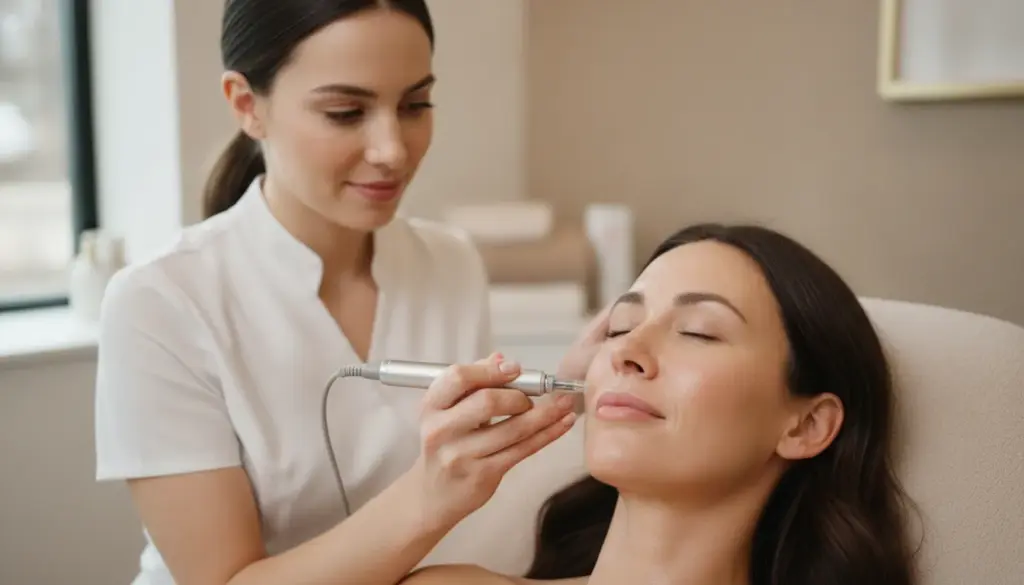
Acne scars rarely tell the whole story of what your skin needs. Their depth, shape, tone, and the presence of active acne can all influence whether traditional microneedling is a sensible option and how much improvement is realistic.
Microneedling for acne scars pittsburgh may help soften the appearance of some mild acne scars by creating controlled micro-wounds that stimulate the skin’s collagen and elastin production. It is not a promise of complete scar removal, and most people need a personalized series rather than one appointment.
At Your Skin Prescription in Sewickley, the process begins with an assessment of your skin, health history, scar concerns, and goals. From there, your provider can explain preparation, recovery, timing, and whether traditional microneedling is the right fit before discussing how the treatment works beneath the surface.
Contact Your Skin Prescription to plan an individualized consultation
Considering Microneedling for Acne Scars Pittsburgh? Start Here
Traditional microneedling is a collagen induction treatment designed to encourage the skin’s own repair process. A medical aesthetician uses tiny sterile needles to create controlled micro-wounds in the skin. These small openings are not intended to remove the scar in one session. Instead, they prompt a healing response that can support new collagen and elastin production over time. Cleveland Clinic describes microneedling as a minimally invasive procedure that creates tiny openings and stimulates this repair process: learn more about how microneedling works.
For someone considering microneedling for acne scars in Pittsburgh, the practical goal is usually gradual improvement in the appearance and feel of uneven texture. Acne scarring can leave depressions or irregularities that are more noticeable in certain lighting. Because microneedling reaches below the surface more effectively than microdermabrasion, it may be useful for concerns that are not limited to the outermost layer of skin. The practice lists traditional microneedling for acne and scarring, along with concerns such as enlarged pores, fine lines, sun damage, and hyperpigmentation.
How collagen remodeling affects scar texture
After the controlled micro-injuries, the skin moves through a repair and remodeling process. Newly produced collagen does not instantly fill or erase a scar. It develops gradually, and the visible response depends on factors such as scar characteristics, skin health, treatment settings, and how the skin heals. This is why a treatment plan may involve multiple appointments rather than a single procedure. The practice lists a typical range of four to eight traditional microneedling sessions, but that range is general guidance, not a promise or a requirement for every person.
Research supports microneedling as a possible option for improving acne-scar appearance, while also showing why expectations should remain measured. A systematic review reported improvement across the articles it evaluated, but Mayo Clinic notes that results can be subtle and repeat treatments may be needed. No single acne-scar treatment is right for everyone. Treatment selection should account for scar type, skin type, and the severity of the scarring.
What traditional microneedling cannot do
Traditional microneedling cannot guarantee complete scar removal, restore every contour to an identical surface, or produce the same outcome for every scar pattern. Deeper or more established scarring may require a different approach or a combination of options after professional assessment. Active acne, inflammation, or another skin concern may also need attention before treating residual scars. During a consultation, the provider can evaluate your goals and determine whether traditional microneedling in Sewickley is an appropriate fit for your skin.
What Happens During the Consultation?
A thoughtful consultation turns microneedling into a personalized plan rather than a one-size-fits-all appointment. Your provider will look closely at the areas you want to improve and discuss your goals. They will also consider whether traditional microneedling is an appropriate match for your skin at this stage.
Acne scars can vary considerably in pattern, depth, and texture. The same settings and treatment schedule are not suitable for every person.
The assessment may include whether scars appear shallow or deeper, whether they are concentrated in particular areas, and whether active acne is present. Deep cysts are especially likely to scar, according to the Cleveland Clinic. Treating active lesions is a different consideration from treating the texture left behind after acne has settled. If there is an active infection, significant irritation, or an unresolved skin concern. The provider may recommend addressing skin health first rather than moving directly into a needling treatment.
Skin tone and pigmentation history are also relevant to the conversation. Your Skin Prescription describes traditional microneedling as safe for all skin tones, while emphasizing that candidacy, settings, and aftercare should be determined individually during consultation. This approach leaves room to discuss how your skin tends to heal, whether you have experienced post-inflammatory discoloration, and what level of stimulation is sensible for your goals.
Expect questions about your medical history, current medications, recent procedures, allergies, and any conditions that may affect healing or sensitivity. Share this information openly, including topical or prescription products and supplements. It helps the medical professional evaluate the full picture and give you guidance that is specific to your circumstances. The consultation is not a test you need to pass. It is an opportunity to make the appointment safer, more comfortable, and more closely aligned with your needs.
Mayo Clinic notes that acne-scar treatment selection depends on scar type, skin type, and the severity of scarring, and that no single treatment is best for everyone. That principle guides the discussion at Your Skin Prescription, where education and individualized planning are central to the experience. Depending on the assessment, the recommended path may involve traditional microneedling, a different modality, or a staged approach. You can review more general microneedling benefits and downtime, then bring your questions to a consultation serving Pittsburgh from the practice’s Sewickley location.
How Should You Prepare for a Microneedling Appointment?
Preparation is simple, but the safest plan depends on your skin condition, medical history, and the settings selected during your consultation. Your provider should give you personalized instructions before treatment, especially if you have sensitive skin, a history of pigmentation changes, or an acne-scar concern.
Protect your skin before treatment
Limit direct sun exposure before your appointment, and avoid tanning beds and spray tans. Some microneedling providers recommend avoiding these sources of tanning for at least two weeks before treatment. Your practice may adjust that guidance based on your skin’s condition and the amount of recent exposure. Arriving with calm, untanned skin helps your provider assess your baseline accurately. General preparation guidance from a microneedling provider includes this precaution.
Ask which skincare products to pause and when to resume them. Do not introduce a new exfoliant, peel, or active product immediately before an appointment unless your provider specifically recommends it. On treatment day, follow instructions about cleansing and makeup. You may be asked to arrive with clean skin and without makeup so the treatment area can be evaluated and prepared appropriately.
Tell your provider about changes in your skin and health
Postpone treatment or contact the practice before arriving if you have an active infection, open irritation, or severe or cystic acne in the treatment area. Microneedling should generally wait until these concerns are controlled. Cysts are deep lesions that are especially likely to scar, so treating the underlying acne may need to come first. This is one reason preparation is not a one-size-fits-all checklist. Clinical preparation guidance also recommends waiting when active infections or severe acne are present.
Share a complete list of medications, supplements, recent procedures, and relevant health conditions. Also tell your provider if you are pregnant or nursing, have a compromised immune system, or are using treatment that may affect healing or skin sensitivity.
These circumstances can change whether microneedling is appropriate and how it should be planned. Never stop a prescribed medication on your own. Ask your prescribing clinician and microneedling provider how to proceed. Pregnancy, nursing, and immune considerations should be reviewed directly with your provider.
Your Skin Prescription describes traditional microneedling as suitable for all skin tones, while emphasizing individualized candidacy, settings, and aftercare. Before treatment for acne scars, review these details with the medical aesthetician or other provider so your plan reflects your skin’s needs, not a generic protocol.
What Is Recovery Like After Traditional Microneedling?
Recovery after traditional microneedling is usually manageable, but your skin may look and feel temporarily different as it settles. The practice lists approximately one to three days of downtime for its traditional microneedling plan. The visible recovery window can vary with your skin, treatment settings, and response. Your provider will give individualized aftercare instructions during your appointment.
What your skin may look and feel like
Redness or pinkness is common immediately after treatment. One Pittsburgh dermatology practice compares the appearance to a mild sunburn and reports that this effect may last about 24 to 48 hours. These treatment effects commonly resolve within a few hours to a couple of days, but individual experiences differ. Mild sensitivity, warmth, tightness, or a feeling that the skin is more reactive than usual may also occur during the early recovery period.
As the skin continues to heal, you may notice dryness, tightness, or light flaking. A microneedling provider in Pittsburgh reports that these changes can last for approximately three to five days. That does not mean every person will experience the same pattern, and more visible peeling is not a sign that treatment worked better. Let the skin shed naturally rather than rubbing, picking, or exfoliating it.
Aftercare and makeup timing
Use only the products and cleansing routine recommended by your medical aesthetician or other provider. Keep your hands clean before touching the treated area, avoid picking at flakes, and protect your skin from direct sun exposure as directed. Do not add strong exfoliants, irritating active ingredients, or unfamiliar products during recovery unless your provider specifically approves them.
For makeup, conservative guidance from a microneedling provider recommends waiting at least 24 hours before applying it. This gives the skin time to settle and helps reduce avoidable irritation or contamination while it is especially sensitive. If you have an important event, ask about timing before booking rather than assuming the shortest listed downtime will apply to you.
When to ask a question
Contact the practice if your response concerns you or does not follow the recovery instructions you received. Candidacy, treatment settings, and aftercare are individualized. The practice describes traditional microneedling as suitable for all skin tones while still requiring personalized guidance. If lingering dark marks are a concern rather than indented scars, ask whether post-inflammatory hyperpigmentation treatment is the more relevant topic for your evaluation.
How Long Does It Take to See Acne-Scar Results?
Acne-scar improvement develops gradually because traditional microneedling works with the skin’s repair process rather than covering the surface temporarily. The treatment creates controlled micro-wounds, which support collagen and elastin production as the skin heals. That remodeling takes time, so early changes may be subtle and continue to develop after the appointment. Cleveland Clinic notes that multiple treatments are often needed, while Mayo Clinic describes results as subtle and repeat treatments as potentially necessary.
What the first few weeks may look like
The practice-listed general range for traditional microneedling is approximately 1 to 3 days of downtime, but downtime is different from the results timeline. Temporary redness, sensitivity, dryness, or tightness can occur while the skin settles. Some people may begin noticing texture changes in roughly two weeks, but that timing is not a promise. The response depends on your skin, the type and depth of scarring, the settings selected, and how consistently you follow aftercare instructions.
Collagen remodeling continues beyond the initial recovery period. A systematic review found improvement in acne-scar appearance across the studies it evaluated. Evidence was inconsistent when microneedling alone was compared with combination therapy or fractional laser treatment. That is one reason an individualized plan matters more than a fixed calendar prediction. Traditional microneedling remains the focus here. Other options, such as RF microneedling treatment options or laser treatment for acne scars, use different technologies and should not be treated as interchangeable.
Why a series may be recommended
Your Skin Prescription lists a typical traditional microneedling plan of 4 to 8 sessions. Repeat appointments are generally spaced several weeks apart to allow the skin to recover and the remodeling process to progress. Some clinical practices describe repeat sessions at least 4 to 6 weeks apart, but your provider should determine the interval for your skin and treatment response.
Scar depth also affects expectations. Mild textural scarring may respond differently from deeper or more established scars. A patient with deep acne scarring may require six or more treatments according to one clinical practice source. A consultation can help assess scar type, skin type, and severity before recommending settings or a session range. Think of the 4 to 8 session range as general planning guidance, not a guarantee of a specific outcome. The goal is a safe, measured series that can be adjusted as your skin responds.
Traditional Microneedling vs. Morpheus8 for Acne Scars
Traditional microneedling and Morpheus8 both use needles, but they are not the same treatment. Understanding the distinction can make a consultation more productive, especially when you are comparing RF microneedling treatment options with collagen induction therapy for acne-scar texture.
Traditional microneedling uses tiny sterile needles to create controlled micro-wounds in the skin. That healing response supports collagen remodeling without adding radiofrequency energy. Your Skin Prescription lists it for acne and scarring, with settings selected around your skin, scar pattern, and treatment goals.
| Treatment | Technology | Practice-listed considerations |
|---|---|---|
| Traditional microneedling | Needles create controlled micro-wounds to support collagen induction. | Often planned as 4 to 8 sessions, with approximately 1 to 3 days of downtime. |
| Morpheus8 | RF microneedling combines needle penetration with radiofrequency energy. | Customizable penetration is listed up to 4 mm, with approximately 3 to 5 days of downtime. |
Morpheus8 may be considered when a provider believes RF energy and a different penetration profile fit the concern. It should not be described as a stronger version of traditional microneedling or assumed to be the right choice for every scar. The practice lists Morpheus8 separately for acne scars, and your provider can explain how its technology and recovery expectations apply to your skin.
Other modalities may also enter the discussion. PRF Gel uses material from your own blood and is listed as a distinct acne-scar option. It may be considered alone or as part of a broader plan, depending on candidacy and goals. A non-ablative fractional laser such as LaseMD is another separate approach listed for acne scarring. Learn more about laser treatment for acne scars before deciding which questions to bring to your consultation.
There is no universal winner. Scar type, skin tone, active acne, sensitivity, downtime preferences, and previous treatments all matter. A personalized assessment in Sewickley can help you compare traditional microneedling, RF microneedling, PRF, and laser options without treating them as interchangeable.
Who May Be a Good Candidate for Microneedling in Pittsburgh?
Traditional microneedling may be worth discussing if you are bothered by mild acne-scar texture, uneven skin, enlarged pores, or related concerns and your skin is currently stable. The treatment uses tiny sterile needles to create controlled micro-wounds that support the skin’s natural healing response. Cleveland Clinic notes that microneedling may reduce the appearance of mild acne scars, but candidacy depends on more than the presence of scarring. Scar type, skin type, severity, medical history, and your goals all influence whether it is an appropriate starting point.
Stable skin is an important starting point
Microneedling is generally not performed over an active infection or uncontrolled inflammatory breakout. Severe or cystic acne may need to be controlled first, since cysts are deep lesions that are especially likely to scar. A Pittsburgh plastic-surgery practice also advises postponing treatment until active infections and severe or cystic acne are controlled. Pregnancy, nursing, a compromised immune system, chronic skin conditions, and certain medications may also affect eligibility. These factors do not replace a medical evaluation, so share your complete health history and current treatment with your provider.
Settings should be individualized for every skin tone
Your Skin Prescription describes traditional microneedling as suitable for all skin tones. Candidacy, device settings, and aftercare must still be determined during consultation. That individualized approach matters when planning treatment for acne scars in Pittsburgh. Skin sensitivity, pigmentation history, scar depth, and the treatment area can vary significantly from person to person.
A consultation should clarify whether traditional microneedling fits your concerns or whether another option deserves consideration. No single acne-scar treatment is best for everyone. Improvement should be discussed as a possibility rather than a guarantee.
Your Skin Prescription provides traditional microneedling in Sewickley for clients from Sewickley and the Greater Pittsburgh area. At the 634 Beaver St location, the team emphasizes education, personalized planning, and a calm treatment experience. If your skin is stable and you are exploring microneedling for acne scars pittsburgh. An individualized consultation can help determine whether the treatment and its expected recovery align with your skin’s needs.
Frequently Asked Questions
Does microneedling actually fix acne scars?
Traditional microneedling may soften the appearance of some acne scars by creating controlled micro-wounds that support collagen production. It does not erase every scar, and results vary by scar type, skin type, severity, and overall skin health. A consultation helps determine whether rolling, boxcar, or another scar pattern is likely to respond and whether a different or complementary option deserves consideration. Cleveland Clinic notes that microneedling may reduce the appearance of mild acne scars: Cleveland Clinic guidance.
How many microneedling sessions might I need for acne scars?
The practice-listed plan typically involves four to eight sessions, but that range is a planning guide rather than a promise. Deeper or more extensive scarring may require a different approach or a longer treatment plan. Sessions are spaced to allow the skin to recover and collagen remodeling to progress, so the provider will set timing during your consultation. Mayo Clinic describes acne-scar results as subtle and notes that repeat treatments may be needed: Mayo Clinic guidance.
How long is recovery after traditional microneedling?
The practice lists approximately one to three days of downtime for traditional microneedling. Redness, sensitivity, dryness, or tightness can occur during early recovery, although each person responds differently. Follow the provider’s instructions for cleansing, sun protection, products, makeup, and activity rather than relying on a generic routine. Contact the practice if your reaction seems unexpected or is worsening instead of improving.
Can I have microneedling if I still have active acne?
Not necessarily. Active, severe, cystic acne or a skin infection may need to be controlled before treatment, because needling irritated or infected skin can be inappropriate. Your provider will also review medications, health history, skin sensitivity, and pigmentation concerns when assessing candidacy. Do not stop prescribed medication on your own. Instead, share your current treatment list during the consultation so settings and timing can be individualized.
Plan Your Acne-Scar Consultation in Sewickley
Traditional microneedling may help soften the appearance of acne scars by supporting your skin’s natural renewal process. The right approach depends on your scar type, skin history, sensitivity, and goals. At Your Skin Prescription, your consultation is an opportunity to discuss what you hope to improve. Learn how treatment works, and understand the expected recovery process before deciding whether microneedling is appropriate for you.
Serving Pittsburgh-area clients from our Sewickley practice, our team takes a thoughtful, personalized approach to skin care. We will answer your questions and recommend next steps based on your needs, without pressure or promises of a specific result.
Contact Your Skin Prescription.