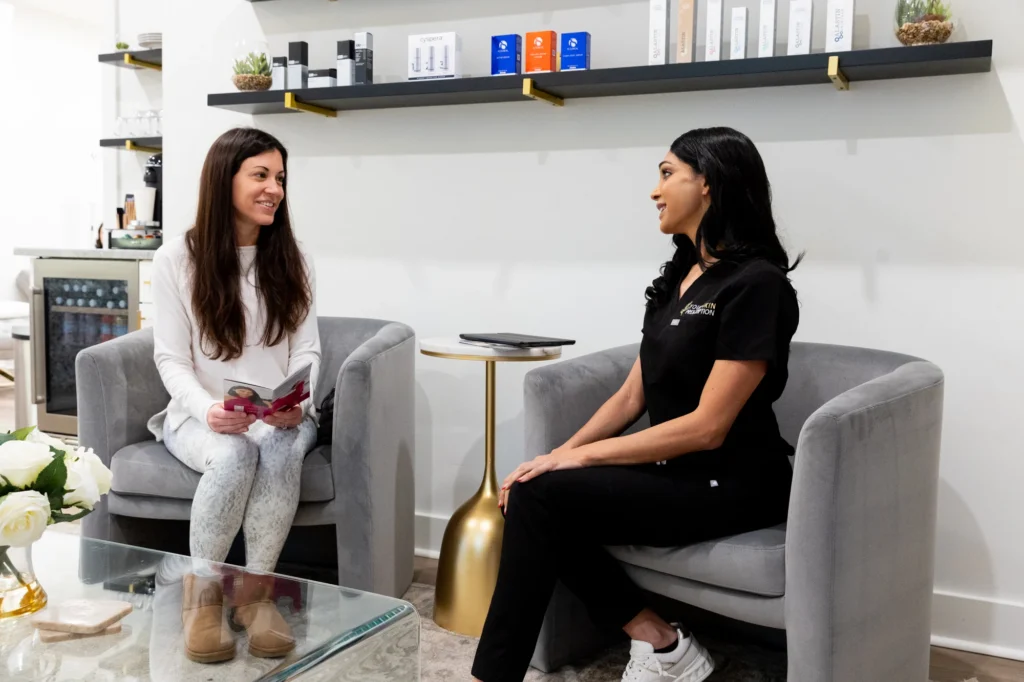
Choosing between AdvaLight and Sofwave in Pittsburgh starts with a clear description of what you want to address. These treatments are not interchangeable: AdvaLight is a laser platform used for selected skin concerns, while Sofwave is commonly considered when discussing skin laxity and a firmer-looking appearance. A consultation can help connect the concern, your skin, and a suitable plan.
What is the main difference between AdvaLight and Sofwave?
The key difference is the treatment goal and technology being discussed. AdvaLight is a laser platform for selected concerns; the particular concern and the device protocol need to be assessed. Sofwave is an energy-based treatment commonly considered for skin laxity and a firmer-looking appearance. Each has its own use, and a device name alone cannot tell you whether it fits your needs.
Start with the concern rather than the device. A person focused on a specific visible skin issue may need a different discussion from someone concerned about firmness. If you have several goals, ask which one should be addressed first. A treatment that makes sense for one concern may not address another, and a provider should explain the limits as clearly as the intended purpose.
Your Skin Prescription offers an overview of skin tightening options. Use it as background for your questions, not as a substitute for an individual assessment.
Which goal should guide your comparison?
Before comparing treatments, describe what you notice in everyday language. Is it a surface concern, a change in firmness, or a combination? Be specific about the area and the change you hope to see. For example, “I want my skin to look firmer around this area” gives a provider a more useful starting point than “I want to look younger.”
- If your concern is surface-focused: Ask whether AdvaLight is appropriate for that particular concern, your skin characteristics, and your history.
- If your concern is firmness or laxity: Ask whether Sofwave is a reasonable option and which areas or changes are realistic to discuss.
- If you have multiple priorities: Ask whether a staged plan is sensible, or whether another concern should be addressed first.
- If you are unsure: Explain what you notice and ask the provider to help identify the treatment goal before discussing devices.
Do not assume either option addresses every sign of aging or every skin issue. Another approach, a combination over time, a basic skin-care plan, or waiting may be more appropriate. A good recommendation makes the reasoning understandable and leaves room for questions.
How do AdvaLight and Sofwave compare?
This table is a framework for a conversation, not a promise of results or a determination of candidacy. Protocols, visit plans, preparation, and aftercare depend on the individual plan. Ask the provider to explain any point that is not clear.
| Comparison point | AdvaLight | Sofwave |
|---|---|---|
| Common discussion focus | Selected skin concerns suited to the particular laser technology | Skin laxity and a firmer-looking appearance |
| Useful first question | Is this suitable for my concern and skin characteristics? | Is this suitable for my concern and treatment area? |
| Details to clarify | Proposed area, session plan, preparation, and aftercare | Proposed area, session plan, preparation, and aftercare |
| What informs suitability | Concern, skin characteristics, relevant history, and provider assessment | Concern, treatment area, relevant history, and provider assessment |
| Cost comparison | Request an estimate for the proposed plan | Request an estimate for the proposed plan |
The table does not establish that one is better. It helps identify what a fair comparison requires: the same concern, a defined treatment area, a clear plan, and an explanation of what the approach is intended to accomplish. If two recommendations address different goals, comparing only the device names or quoted totals can lead to the wrong conclusion.
What should you ask at a consultation?
A useful consultation connects your goal to a specific plan. Ask the provider to explain what the treatment is intended to do, what it cannot do, and why it may fit your circumstances. You can bring these questions as a short checklist:
- What concern are we addressing? Ask for a direct connection between the concern you described and the proposed treatment.
- Why this option for me? Ask which features of your skin, history, and goals informed the recommendation.
- What change is realistic? Request a plain-language description of scope and limitations. An idealized example is not a guarantee of your result.
- How many visits might be considered? Ask whether the proposed plan involves one visit or a series, and what could change that advice.
- What preparation and aftercare are involved? Ask what to pause beforehand, what to expect afterward, and who to contact with a concern.
- What is the complete estimated cost? Clarify what is included, whether follow-up is part of the plan, and how additional visits are handled.
- What alternatives should I weigh? Ask whether a different treatment or simpler skin-care approach may better fit your priority.
Write down the answers, including the proposed area and the provider’s reasoning. If an explanation is unclear, ask for it in different words. You should understand both the expected purpose and the limitations before deciding. A recommendation should feel connected to your concern, rather than chosen before your skin and goals are discussed.
How do skin characteristics and health history matter?
Energy-based treatments are not automatically right for everyone. Share relevant health information, medications, recent procedures, prior reactions, and changes in your skin. Mention active irritation or any concern in the proposed treatment area. The provider can decide what is relevant, but needs accurate information to assess whether a treatment is appropriate, should be delayed, or calls for another approach.
Ask directly how your skin characteristics affect the recommendation. Invite the provider to explain precautions and what findings might change the plan. If you have had an unusual reaction, or a condition that affects the area, ask whether additional review is needed before booking. Do not stop a medication or change your routine on your own; ask the appropriate clinician what to do.
A careful process includes time to assess and answer questions. If you feel rushed, or still do not understand why a particular treatment is proposed, it is reasonable to pause and request clarification before making a decision.
What should you expect about comfort and recovery?
Comfort and recovery can vary by person, treatment settings, area, and individual response. Ask what sensations clients may notice during the visit, how comfort is managed, and what temporary changes could occur afterward. Clarify what the provider considers expected and which changes should prompt a call to the practice. Avoid relying on a broad claim about downtime when your actual plan has not been discussed.
Consider your calendar before selecting a date. If you have an event, travel, or a demanding work week coming up, mention it during planning. Ask whether the proposed timing leaves enough flexibility for your own response and any recommended follow-up. Do not assume an appointment will fit a particular schedule without confirming the expected visit length and aftercare.
Follow the individualized instructions you receive. If you are uncertain about a product, activity, or existing routine after treatment, check with the provider rather than improvising. The practice’s skin-care and treatment information can help you prepare questions, but personal guidance should come from your treating professional.
How can you compare two recommendations fairly?
Compare the proposed plans, not just the technology names. Record each recommendation in the same format: the goal, area, proposed number of visits, preparation, recovery guidance, follow-up, total estimate, and the reason given. This makes differences easier to spot and helps you ask useful follow-up questions.
- Write one sentence describing your main concern and the area involved.
- Ask each provider how the proposed treatment relates to that concern.
- Record visit plans, preparation, aftercare, and fees in matching categories.
- Ask what could make you a poor candidate or lead to a different recommendation.
- Identify any unanswered questions, then request clarification before comparing.
- Take time to decide; a consultation does not require you to book immediately.
For example, suppose one recommendation is based on a surface-focused concern and another addresses firmness. They are not direct substitutes just because both use energy. First decide which concern matters most, then compare the options proposed for that same goal. If the recommendations differ for the same goal, ask each provider to explain the factors behind the difference.
Do not compare only a starting price. A quote may apply to a different area, plan, or number of visits. Ask for the full estimate for the recommendation being discussed and whether follow-up or other care is included, optional, or not part of the estimate. Clear scope makes a price comparison more meaningful.
What does device oversight tell you?
Device names and marketing descriptions do not answer every question about safe, appropriate use. Ask what technology is being proposed, what it is intended to address, and what training and assessment inform its use in your case. You can also read general medical-device information from the U.S. Food and Drug Administration. Agency information is background, not an individual recommendation or proof that a treatment will produce a particular result.
Keep the conversation specific to the proposed treatment. Ask whether there are precautions relevant to your history, which provider will perform the treatment, how your goals will be recorded, and what follow-up process is available if you have questions afterward. A provider should be willing to discuss limitations and alternatives without promising a particular outcome.
When might another option be a better fit?
Neither AdvaLight nor Sofwave is automatically the best choice for everyone. If your main issue is not addressed by either, a provider may discuss another service or a simpler skin-care approach. Your Skin Prescription has information about facial options, but the right choice depends on an assessment of your needs.
Waiting can also be a reasonable decision. You may want more time if your goal is still unclear, safety questions remain unanswered, or your schedule is not suitable. A consultation is a chance to gather information; it does not obligate you to proceed. You can take your notes home and decide after considering the proposed plan and its limitations.
How can Pittsburgh-area clients plan the next step?
For people in Pittsburgh, Sewickley, and nearby communities, start by preparing a brief description of your priority and any questions about suitability. If travel or a busy calendar affects your decision, ask about the expected appointment length and whether follow-up is recommended before committing. Bring a list of medications, recent treatments, and relevant skin history so you do not have to rely on memory during the visit.
You can learn more about the practice through its Sewickley medical spa page and review the provider team. For treatment background, see the practice’s Sofwave treatment guide and AdvaLight information. These pages can help you form questions, but they cannot establish candidacy or guarantee an outcome.
Before you go, make a one-page comparison note rather than trying to remember every detail. Put your priority at the top, then list the area, proposed approach, reasons for the recommendation, expected visit sequence, aftercare, cost scope, and open questions. If a point is unknown, mark it for follow-up instead of filling in a guess. This simple record is especially useful when you are comparing plans discussed on different days, because it keeps the same criteria in view.
A practical example: imagine your main concern is that one area appears less firm, but you also have a separate surface concern. Write those as two distinct priorities. Ask which one the consultation is addressing and whether the proposed plan is intended to change the appearance of that specific area. If an option is recommended for the surface concern, do not assume it also addresses firmness; ask whether a separate plan or different timing should be considered. Separating goals helps prevent a broad hope from being mistaken for a defined treatment objective.
You can also use the conversation to identify what would make you defer. Perhaps the plan is not yet clear, the recovery guidance does not fit a near-term event, or you need clarification about how your history affects the proposed approach. Naming that condition in advance gives you a useful decision point. You can ask for the missing information, revisit the plan later, or decide that another option better matches your priorities.
Frequently asked questions
Is AdvaLight the same as Sofwave?
No. They use different technologies and are commonly discussed for different goals. Ask a provider whether either is appropriate for your particular concern.
Can I choose based only on the device name?
No. Suitability depends on your goals, skin characteristics, health history, treatment area, and provider assessment. The name does not establish what result you can expect.
How do I find out which plan costs more?
Request an estimate for each specific recommendation, including the area, number of visits, and follow-up. Comparing plans with the same scope is more useful than comparing general starting prices.
Should I book treatment at my first consultation?
That is your choice. You can use the visit to ask questions, review the plan, and decide later if you need more time or information.
Plan your next step
Book a consultation in Sewickley
The most useful comparison connects your concern to a clear, individualized plan, with realistic expectations and enough time to make an informed decision.