Korean beauty products are known for thoughtful textures, layered routines, and a wide range of formulas. But a longer routine is not automatically a better routine. The useful question is which products match your skin goals, what each one adds, and how to introduce it without overwhelming your skin.
Schedule a personalized skin consultation
What do people mean by Korean beauty products?
The term usually refers to skin-care products developed or popularized in South Korea. It can include cleansers, toners, essences, serums, moisturizers, masks, and sunscreens. Many formulas emphasize comfortable textures and hydration, while the familiar multi-step routine presents several product categories in sequence. Neither the country of origin nor the number of steps tells you whether a product is right for your skin.
It helps to think of the routine as a set of jobs instead of a checklist. A cleanser removes daily residue. A moisturizer supports a comfortable feel. A daytime sunscreen helps protect exposed skin from ultraviolet radiation when used as directed. A treatment product may be added if it serves a clear goal. A toner, essence, or mask can be an optional preference rather than a required step.
This distinction matters when you are comparing products. A light essence and a hydrating serum may both be intended to add moisture, for example. If you already use a product that serves that purpose and like how your skin feels, buying another similar formula may not add much to your routine. Judge a product by its role, ingredients, directions, and your own experience, not by a trend name alone.
How can you choose Korean beauty products around a skin goal?
Start with one concern you can describe in ordinary language. “My face feels tight after cleansing” is more useful than “I need the newest routine.” “I want a routine that feels lighter during the day” gives you a practical direction for comparing textures. A clear goal narrows the options and makes it easier to tell whether a new step has a reason to stay.
- Dry or tight-feeling skin: Consider a gentle cleanser and a moisturizer that feels comfortable. A hydrating toner or essence can be an optional layer, but it does not replace moisturizer if your skin still feels dry.
- Oily or combination skin: Look for textures that you will use consistently. Oily skin still benefits from a gentle approach to cleansing and moisturizing; a harsh or overly frequent wash can leave skin feeling uncomfortable.
- Uneven-looking tone: Choose any targeted formula carefully and introduce it gradually. Keep daytime sun protection in place, and avoid expecting one product to address every source of uneven color.
- Reactive or sensitive skin: Keep the routine simple while assessing a new item. Read the full ingredient list, use the product as directed, and be cautious with formulas that contain ingredients you already know do not suit you.
- Texture or visible congestion concerns: Resist the urge to add several strong products at once. A qualified professional can help you decide whether home care is a sensible first step or whether the concern deserves further assessment.
These are starting points, not diagnoses. If you have a persistent skin concern, significant irritation, or a diagnosed condition, it is sensible to seek appropriate professional advice rather than trying to solve it by buying more products. Your priorities may also change with the season, your schedule, or the products you already use.
People who want a bigger picture of how product categories fit together can read our guide to the Korean skincare routine. If you are considering an in-office service as well as home care, our Korean facial overview is another place to start.
Which routine steps are essential, and which are optional?
There is no single routine that everyone needs to follow. A useful starting point is a small number of products that address basic daily needs, followed by an optional treatment only when you know why you want it. A manageable routine is easier to repeat and makes it simpler to notice which product may be helping or causing a problem.
| Product type | Main role | When to consider it | What to check |
|---|---|---|---|
| Cleanser | Removes surface residue, oil, and daily buildup | When you need a comfortable way to cleanse | Whether skin feels uncomfortably tight or irritated afterward |
| Toner or essence | Adds a light layer of hydration or other formula-specific qualities | When you enjoy the feel and it fills a gap | Whether it duplicates a serum or another hydrating step |
| Serum | Provides a focused formula for a particular concern | When you have a defined goal and understand the directions | Ingredients, frequency, and fit with products you already use |
| Moisturizer | Helps reduce water loss and supports a comfortable feel | When skin needs a moisturizing step | Texture preference and how skin feels after use |
| Sunscreen | Helps protect exposed skin from ultraviolet radiation | As a consistent daytime step when following its directions | Whether you can apply it comfortably and consistently |
| Mask | Offers a periodic, product-specific experience | As an optional extra, not a substitute for basics | Directions, ingredients, and whether it suits your skin |
The table is a comparison of roles, not a prescription for a fixed order or a reason to purchase every category. If your skin is comfortable with a cleanser, moisturizer, and daytime sun protection, you might not need a toner or mask. If a product feels pleasant but does not address a priority, it can still be an optional enjoyment, but be honest about whether that is the reason you are keeping it.
How should you read labels and compare ingredients?
Begin with the product’s intended role and full ingredient list. Marketing language such as “glass skin,” “clean,” or “brightening” does not, by itself, explain how a formula will feel or perform. Look for the ingredients that are relevant to the goal you identified, then consider the rest of the formula and its directions. Fragrance, botanical extracts, and other components may not suit every person.
Compare products by asking the same questions each time: What is this for? How often does the label say to use it? Is it meant to be rinsed off or left on? Does it overlap with something already in the routine? Do you recognize anything that has bothered your skin before? These questions provide a more useful comparison than packaging, popularity, or a long list of claims.
Do not assume that a familiar ingredient guarantees a predictable result. Concentration, the full formulation, frequency of use, and your skin’s condition all matter. An ingredient name is only one part of the product. If you use a prescription skin-care product or have a diagnosed condition, check with the clinician who guides that care before adding a strong active. Avoid starting several exfoliating or treatment products together because it becomes difficult to identify which one is responsible for a reaction.
A review of bioactive ingredients in Korean cosmeceuticals discusses product innovation and research in this category. It provides context on the field, but research about an ingredient does not show that every finished product will behave the same way for every person. See the journal review of bioactive ingredients in Korean cosmeceuticals as background, and let your own needs and suitable professional guidance shape product decisions.
How can you introduce a new product without changing everything?
A gradual trial is practical for two reasons: it gives you a chance to observe your skin, and it helps you avoid spending on several new products before you know which ones suit you. Use the steps below as a decision process, not as a promise that a product will work or that irritation cannot occur.
- Write down the concern. Be specific: tightness after cleansing, a texture preference, or the desire for a focused step is clearer than a broad wish for better skin.
- List your current routine. Include prescriptions, occasional masks, makeup removers, and products you use only on certain days. If possible, note the product names and when you use each one.
- Keep familiar basics steady. Avoid changing your cleanser, moisturizer, sunscreen, and multiple treatments at the same time. Stability makes it easier to understand what a new formula changes.
- Choose one product with one job. Prefer the option whose purpose is easiest to explain. If two products appear to serve the same role, compare the formula, directions, and texture before deciding whether you need either one.
- Read and follow its directions. Pay attention to whether it is a leave-on or rinse-off product, how often it is intended to be used, and any cautions on the label. Do not assume that more frequent application will produce a better outcome.
- Try it cautiously. Follow product instructions and, when appropriate, try a limited-area application before broader use. A small-area test does not guarantee that irritation will never occur, so continue to pay attention as you begin use.
- Make a brief note. Record when you started, how often you used it, and what you noticed. If a reaction occurs, that timeline can help you explain what happened to a professional.
- Reassess before adding anything else. Ask whether the product has a clear place in the routine, feels comfortable, and remains worth the time and cost to you. If it has no useful role, you do not have to keep it simply because it is popular.
For example, imagine that your skin feels tight after your usual evening wash, and you are curious about a Korean essence. First, consider whether the cleanser itself feels too harsh or whether you already have a moisturizer that you do not use regularly. You might adjust one basic step before buying an extra layer. If you still want to try the essence, add only that product, follow its label, and observe rather than also changing your cleanser and moisturizer that week. This gives you a clearer way to judge the experience.
Another example: if your goal is to make a daytime routine feel less heavy, a lightweight texture may matter more than adding multiple layers. Compare how the products feel and whether they fit the rest of your routine. The best choice is one you can use as directed without making the routine complicated or uncomfortable.
How do you decide whether a product is worth keeping?
Use a simple review after you have had a reasonable opportunity to follow the product directions. Ask whether it serves the goal you chose, whether it is comfortable to use, whether it fits with your other products, and whether it is practical to repurchase or use consistently. A product does not need to be a favorite to earn its place, but it should have a purpose you can name.
- Keep it in the routine if it has a clear role, feels suitable, and you can use it as directed.
- Set it aside and review if the routine feels crowded or you cannot tell which products overlap.
- Stop and seek suitable advice if you experience a concerning reaction or persistent discomfort. Do not keep applying a product in the hope that a reaction will resolve on its own.
- Revisit the goal if you are not sure what the product was supposed to do. You may need a simpler plan, not another product.
Keep the packaging or take a clear photo of the label when you ask for help. It can be useful to have the ingredient list, directions, and the date you started using the product available. A list of every item in your routine is more informative than a single favorite product because combinations and frequency matter too.
When should you ask for personalized skin-care guidance?
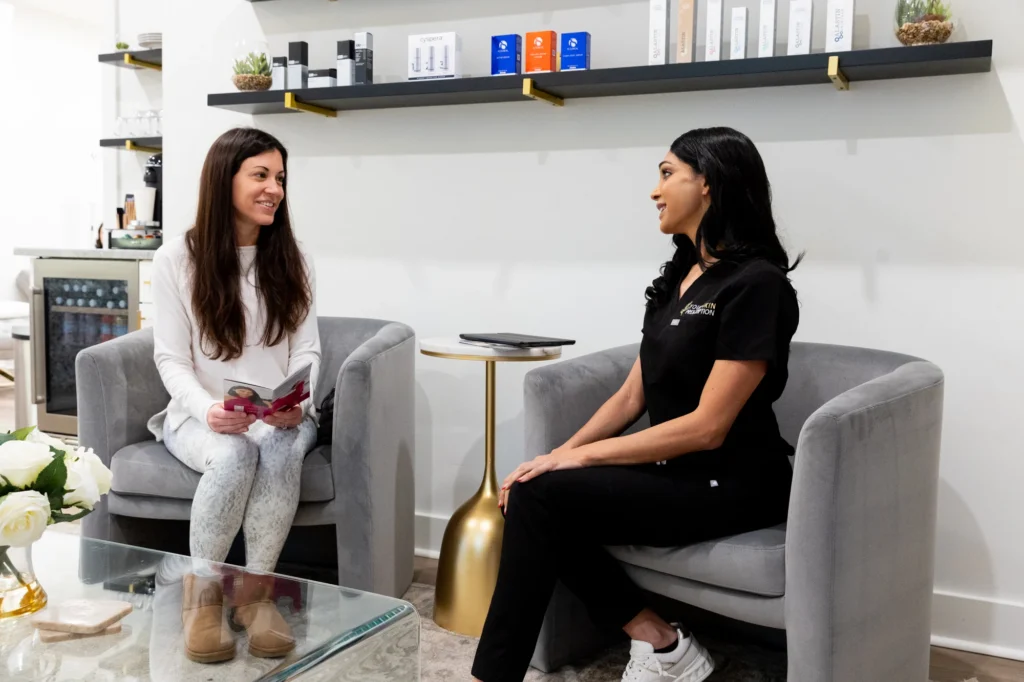
Consider asking for guidance if you are unsure what to address first, experience repeated irritation, use prescription skin care, have a diagnosed skin condition, or have several products that seem difficult to combine. A conversation can help you sort out your goals and identify the questions you should take to an appropriate clinician. A skin-care consultation is not a substitute for medical evaluation when you have a medical concern.
Before a consultation, write down what you want help deciding. You might ask whether the routine has unnecessary overlap, how to introduce one new product, or which concern deserves attention first. Bring or photograph the labels of products you use, including occasional items. Also mention what you have tried before and what did not feel suitable. That context helps make the discussion specific rather than beginning with a general product list.
Your Skin Prescription describes an educational approach to skin health and offers Korean facial treatments. You can review its facial treatment information and learn about Rain Hoffmann’s professional background before deciding what questions to bring. For a broader look at choosing and using products, read the practice’s skin-care products guide.
How can Pittsburgh-area shoppers make a practical plan?
Whether you shop locally or online, the same basic checks apply: review the full label, buy from a seller you trust, and do not assume that a popular recommendation fits your skin. Keep the product information and follow storage and use directions. If you are buying several items, consider choosing one at a time so that you can evaluate the actual formula instead of creating a pile of unopened products.
For someone in Sewickley or greater Pittsburgh, an in-person conversation may be useful when the main challenge is deciding how home care fits alongside a facial. Tell the provider what you use and how often, particularly if you have recently introduced a stronger treatment product. If you are comparing service options, the practice’s overview of a medical facial can help you think of questions about professional care. The team information offers another way to learn about the people at the practice.
There is no need to arrive with a complete new routine in mind. You can begin with one concern and a short inventory of what you already own. A consultation can be a discussion about whether a service or a change to home care makes sense for your individual situation. Review Your Skin Prescription’s practice information to learn more about its offerings, and use the booking link if you would like to discuss your goals.
Plan your next step
Book a consultation to discuss your skin goals
Frequently asked questions
Do I need a ten-step routine to use Korean beauty products?
No. The number of steps is a personal choice, not a measure of quality. A simple routine that suits your skin and fits your life can be more useful than a long routine you do not maintain. Add optional layers only when they serve a purpose for you.
Can I combine Korean products with products I already own?
Often, but check the intended use and ingredients before combining treatment products. Introduce one new item at a time so that you can observe your skin. If you use prescription products or have a skin condition, ask the clinician who guides your care before making changes.
How should I try a new product?
Follow the directions on the product and consider starting with a limited-area test when appropriate. A small-area test cannot guarantee that irritation will not occur later, so monitor your skin as you begin regular use. Stop if you have a concerning reaction and seek appropriate advice.
Are Korean products automatically better than products from elsewhere?
No. Origin alone does not determine whether a formula fits your skin or routine. Compare its role, ingredients, directions, texture, and how you tolerate it rather than relying on a trend or country of origin.
Should I buy a complete set at once?
Not necessarily. Starting with a set can make it harder to tell which item suits you if you change several steps together. Consider what you already use, identify a gap, and try one product with a clear purpose before deciding whether you need more.
Choose Korean beauty products thoughtfully: start with your skin goal, keep the routine manageable, and ask for personalized guidance when the choices feel unclear.